Monday, 6 August 2012

Giant (1956)

 This is the story of a young woman who marries a cattle rancher, and about how Texas was changing in the '50's. The film has more of an epic quality to it, and there really isn't one storyline or theme running through the entire story. Actually, several very different movies could be made from different parts of the plot. The story begins when the two meet each other, and ends when they're old and grey.

The heroine's name is Leslie, and she's a spirited young woman from a rich family in Washington. She's got a mind of her own and a very strong will. A rancher named Jordan from Texas happens to come to her father's house to buy a very spirited horse (which happens to be Leslie's). He is immediately captivated by her spirit, marries her, and brings her back to Texas with him. Things are bumpy throughout their entire relationship. Various people, including her own husband, are at odds with her progressive ways, just as she is at odds with how they treat the aboriginals and their women. Leslie's struggles aren't the only main story. There is also the story of how times are changing, and how Jordan might not be able to keep up with those changes. Leslie and Jordan raise three kids, and Jordan is really looking forward to having a son to follow in his footsteps, but as luck would have it, his son was afraid of horses from a young age, and eventually becomes the opposite of his father in every way, from profession to choice of wife. There is also a farm hand who is half in love with Leslie, and strikes it rich with oil he found on land that was given to him by Jordan's sister. He adds another level to the story.

I think that this story is ultimately a story of the inevitability of progress, and Leslie represents that progress. There is a scene close to the beginning where Jordan's sister is very upset with Leslie moving in and taking her place as Jordan's wife, taking a place in the home she's moved to. She feels threatened by Leslie and feels the need to demonstrate her dominance. The horse that Jordan bought from Leslie's father was a wild beast, and only Leslie could ride it, but the sister decides that she will ride this animal because it was her ranch and her horse, etc. She ends up being thrown from the horse and dying, and for me that is where the story of progress begins symbolically. The sister represents the old ways... closed-minded and stubborn, and Leslie and her horse represent the new changes that are coming, that are inevitable and that will destroy all before it if too much resistance is met. There are a lot of changes that happen in the movie, many situations of resistance of the norm. A large part of the plot is how aboriginals were treated by the white Texans. Near the beginning of the film, before they were married, Leslie comments on how the land was actually stolen from the natives, which of course makes Jordan very angry. The movie also ends with this theme, and is what finally unites the couples (and brings new and old sensibilities in line with each other). Another area of tension is how women were treated. There was one scene in specific where Leslie makes a big stink about the fact that the men won't allow her to participate in their conversation about politics and business, and how they in fact send her to bed like a child. There is also, of course, the issue of their children growing up to be something other than what their parent's would have hoped. Their son takes after Leslie completely, which angers Jordan to no end. He wants to be a doctor instead of a rancher, and sin of all sins, he falls in love with and marries a native girl. The first daughter is not exactly what Leslie wants either, but the film focuses more on Jordan's wishes, and she disappoints even him, even though he wants to be a rancher. The third is also very aggravating to the two of them because she fancies herself in love with their former hired hand.

Even though the main events of this story happen around a married couple, and how they met and grew old together, I wouldn't exactly call it a romance. Their relationship was more just a fact of life than it was a romantic meeting of souls or star-crossed lovers or anything like that. It was an everyday affair that gave the audience an excuse for being involved in the happenings of the lives of these people. It's more of an epic. Part romance, part drama, part social commentary, part western. And it's over 3 hours long.

It's not my favourite movie ever, but I do love Elizabeth Taylor, and she is exquisite in this role. She's a strong, sensible woman who takes charge of her own life on the ranch and isn't some spineless, biddable wife lacking brains and drive. She carves out a place for herself amongst some very strong personalities that would rather she hold her tongue. I don't know that I will ever watch it again, nor would I say that I'm extremely thrilled at having watched it at all as I like films with more definite plot structure and well-defined themes, but it wasn't a bad film and if you have the time I say give it a go!


Mal'occhio: The Evil Eye (2010)

I came across this documentary by chance and was very excited to watch it. I've always been fascinated by the evil eye, by the fact that social scorn, or even social praise can affect one's physical well-being. It's a cross between the spiritual and the physical, which is a rare occurrence these days, as spirituality has taken a back seat to science in the social sphere, which has stunted societal spiritual growth in my opinion. Mal'occhio was something believed in and practiced mostly by the poor, peasant class. People who were uneducated in comparison with present day standards, and who were arguably closer to the natural world.

For those who don't know, Mal'occhio is the evil eye. The event where someone thinks ill or wishes ill of you, and that act can have physical results in your life. The most common (but not only) symptom is a severe headache, and there are several ways to protect yourself against this 'evil'. The documentary explored what the evil eye is, and how one can rid themselves of it. This documentary was interesting in that it explored personal perspectives of older people in the community as well as the practices and beliefs surrounding the idea of mal'occhio. Usually, it is very difficult to get elders in the Italian community to discuss these details, so hearing and elder's belief, practice, and ritual is an interesting experience. The film tries to explore possible flaws with the ritual, what may compromise the results, but mostly focuses on the possibility of its existence. I felt that the film could have gone into further depth in regards to the origins of the belief, and could have gone into more detail when explaining what mal'occhio actually means, and what happens to you when you have it. We get a vague idea from listening to personal accounts and one or two specialists, but the concept in itself isn't really explained in detail. More time is spent asking whether or not it's real, and if you are not a part of this culture you might be kind of lost.

I wasn't a fan of the filmography. There were more than a few transitional scenes following day-to-day actions that had no narration to tie in their relevance. Events such as lying on a bed, washing dishes, walking down a series of streets, observing art, etc. These scenes are simply presented without any explanation or signifying relevance, which ultimately leads to the frustrating feeling that they should have been cut and are just wasting the viewer's time. This fact, along with the lack of progression from academic and practical experts led the film to present itself in an amateurish light. The film seems like a college project rather than a full-fledged film. That said, it was informative in its own way. There were several perspectives represented and the movie was shot mostly in Italian with English subtitles, which adds to the authenticity. Overall the film was decent. I don't know that I would say this is the best source on the subject, but it is a useful film in introducing Mal'occhio to those who are already slightly familiar with the culture. Maybe not a purchase, but a watch at the very least.


http://www.cbc.ca/absolutelycanadian/upcoming-episodes/2012/06/16/sat-march-24-2012-malocchio-the-evil-eye/

Wednesday, 1 August 2012

To Wong Foo, Thanks for everything! Julie Newmar (1995)

This is the story of three drag queens who, on the way to a national drag queen of the year competition, get stranded in small town America, and bring a tired, backwater town to life.

The story opens with two drag queens, Vida and Noxeema, in New York tying for first place in a drag queen of the year competition, and as the grand prize, win two tickets to the national drag queen competition in Hollywood. As the two congratulate themselves on their victory, they come across one of their competitors, Chi Chi, crying in a stairway. Vida takes pity on Chi Chi and convinces Noxeema to let her go with them to Hollywood, so they sell their tickets and decide to buy an old, and questionably reliable Cadillac to take them to the competition. A sub story continuing throughout the film follows Vida and Noxeema telling Chi Chi the four steps required to become a true drag queen (as they called her a boy in a dress early on in the film). Before they leave however, Vida happens to spot an autographed photo of Julie Newmar saying 'To Wong Foo, Thanks for everything! Julie Newmar' and Vida steals the picture and takes it with them as good luck charm of sorts.

The journey seems to be going well until a racist sheriff pulls them over. he takes quite a liking to Vida and tries to sexually harass her... but is somewhat dismayed when he finds some extra parts between her legs, so Vida knocks him out and they drive away not knowing whether he's dead or alive. This guy will be searching for man-women for the rest of the film... will he find them I wonder. Their luck continues on this streak and their car breaks down a short while later. Chi Chi hitches them a ride to the nearest town where they have to wait for several days for the broken part of their car to come in.

The town they are stranded in seems to have a population of about 20, and they've never seen nothing like these 'career women' in their lives. Each person in this town has some sort of issue, alcoholism, domestic violence, self-esteem issues, douche-baggery, etc. and through the friendships and effort of our fearless hero(ine)s, each of these individuals overcome their personal problems and begin to embrace a life they seemed to have put on hold, or that they never truly started living. Trouble eventually catches up to them in the form of that sheriff (suspense killed), as the abusive husband tips him off to the whereabouts of these manly women. What will the town do when they find out the secret the girls have been keeping? Will they go to jail? And will they ever get to the national drag competition?!?!

I really liked this movie. I tend to like stories featuring cross- dressers or drag queens or transsexuals because it's a true story about discovering the self and choosing to follow your heart, despite the most definite censure you'll face from society, and your friends and family. This isn't to say that other soul-searching stories are not valid stories on the subject, but in that sense the whole 'finding yourself' theme is more about how you hold yourself back from being what you could be, it's usually assumed that others will come to accept your decision in time. Gender and sexuality is a very threatening subject for many people. Either they've been bred to ignorance, or they're not very self-confident or comfortable with their own sexuality and they find someone else's deviation from the social norm a personal attack. There are not very many things in life that are so constricting and taboo as how one defines themselves sexually. If you were born into a religious house hold, or have very expectant parents, you may be expected to follow a certain faith or enter a certain profession, but if you choose to deviate from that expectation, only a handful of people would be hurt, and since it is not an issue of life or death, they may even come to forgive you. If you tell your parents you're gay however, or that you felt that you were born the wrong gender, or that you only feel comfortable in clothes of the opposite gender, you'll have not only have (potentially, there are more and more open-minded people... or people who will just mind their own business if nothing else) your friends and family against you, but your society... and actually the entire world against you as well. It is the most publicly censured private affair in existence. So for a person to choose that kind of life is a very difficult and amazing thing, and is a more valid representation of the struggle of 'finding yourself' than a story about someone who doesn't know what kind of profession to pursue or whom to love.

Something else that really draw me to these sorts of films is that is seems like an innocent story of wanting to be accepted and beautiful, beauty not stemming solely from vanity and self-indulgence. It's kind of like watching a young girl's excitement as she dresses up in a fancy dress for a tea party, or for a day out with her friends. The pure joy one gets from indulging in 'girliness'. There is also a terror that someone will reject your joy, someone will spitefully spill juice on your brand new dress. Maybe this kind of struggle doesn't translate well for males, maybe that's why females seem to be more understanding when it comes to individuals of questionable or contrary gender/ sexuality. Because as girls, we've all known the difficulties and heartbreak that social acceptance can have, and we recognize that the societal 'other'. Who knows. All I know is that I like it.

Also, I never thought Patrick Swayze and Westley Snipes could be so feminine. The actors in this film definitely did an amazing job at capturing the essence of their roles. All in all, great film!


Tuesday, 31 July 2012

Seven Brides for Seven Brothers (1954)

This is a great movie about a backwoodsman named Adam who goes into town to find him a woman to cook and clean and pick up after him and six brothers. He scours the town, sizing up the women he finds, but most of them don't meet his approval. Either they're too weak, or too old, or already married, but he eventually comes across Millie, a woman who works at inn, and she's out back chopping wood. After taking a look at her apparent durability and tasting her cooking, he asks her to marry him... but nothing flowery here, he straight out asks her if she wants to come out with him to live on his farm. He then practically explains to her that he would have properly wooed her, if there had been enough time, but he just didn't have the time. Millie is kind of taken with Adam however and looks right past his rough frankness, thinking that he's quite taken with her. She's also not very happy with her life at the inn, having the feed and pick up after a small army everyday. When she's taken home however, she finds out that's exactly what she signed on for. She's upset at first, but she really takes the boys to her heart and starts preparing them to find girls of their own... and as they're all rough backwoodsmen who've never been in a lady's presence for longer than a second, she has to teach them some manners. The boy's make an impression on several girls in town, but things don't go as planned and they all end up back on the farm with only themselves for company. Now that they've discovered love though, they're all miserable, and Adam is worried he'll lose them all. He hatches a plot to kidnap their lovers, but when he carries it out and brings them unwillingly back home, Millie is so furious that she kicks the men out of the house for the winter (as the pass back to the village is of course snowed in). Adam is miffed at Millie's anger and decides to hide away in some forest cabin for the winter, leaving the boys to fetch and carry for the girls, without actually being able to interact with any of them. As spring comes around, the girls seem to have more than forgiven the boys, and Millie seems to be pregnant. Will the boys and girls be able to be together when the girl's fathers catch up with them? And will Adam ever value Millie as his brothers seem to value their ladies? Watch the find out!!!

I love this movie. The plot and the songs might sound a little but chauvinistic, and it is, but unlike many films of the time, this chauvinism is contested. In fact the way Adam acts toward Millie is almost satirically overplayed as we watch and listen to him size up women to be his wife/ maid, as we hear him convince his brothers that it is ok to kidnap the girls by telling them about the rape of the sabine women, etc. Don't get me wrong, this was a reality in the past. This exact situation actually happened with members of my own family... and they actually had six other siblings, though one was female. The way Seven Brides presents the 'man first' attitude is to have it noticeably present, and have Millie noticeably resist it. Also, the brothers are all sweetly infatuated with their sweethearts of choice, and At the end, Adam and Millie's situation also takes a turn toward the better nearing the end of the story. To top it all off, the songs are great, and it's a musical about freaking lumberjacks! How often do you come across that!? It's a combination of  one of the most 'girly' interests- musicals, and one of the most masculine personalities- lumberjacks/ backwoodsmen. If you like musicals, love stories, pioneering times, comedies, barn yard brawls, or just good film, this is a definite must watch.


Monday, 30 July 2012

Carousel (1956)

This is a musical by Rodgers and Hammerstein about a young girl who falls in love with and marries a carousel barker.

The story opens up with a man, we'll assume he's an angel...  he's dead that's for sure, and he's polishing some stars. Then the boss calls him into the office and they get to talking about his life, about whether or not he had any regrets or any unfinished business back on earth. He then begins to flashback to when he met his wife. The dead man's name was Billy Bigelow, and he made his living barking for carousels... that is standing in front of a carousel and bringing in customers, and on one night a pretty girl comes to the carousel, and he's quite taken with her. The owner of the carousel, an older woman with a bit of a thing for Billy, sees Billy's attraction and bans the girl, Julie, and her friend from the carousel. After Billy stands up for Julie, the carousel owner fires him, and Julie then chooses to leave her job (which fires female workers if they don't make curfew) to be with Billy, and the two of them get married. The story kind of goes downhill from here. Billy knows nothing else but barking and can't seem to find any work... and doesn't try very hard to get it either. The couple live off of Julie's cousin, and neither of them seem to be overly happy about their situation, Billy because he has nothing to do all day (not because he's a leech), and Julie because Billy is miserable... and sometimes takes it out on her. Billy starts becoming more and more elusive and angry as the days go by, to the point where he even beats Julie one night out of frustration. An old acquaintance seeks Billy out and tries to convince him to steal some money with him, but Billy isn't persuaded, until he learns that Julie is pregnant. Things don't go as planned, obviously, and Billy ends up dead. After telling his otherworldly warden this story, he is given the option to go back down to earth, and have the chance to help out the wife and baby daughter he left there. Will he go back, and if he does, will he be able to do anything to help the troubled family he left with nothing?!?!

This isn't my favourite Rodgers and Hammerstein, not by a long shot. Billy is a weak- willed, immature, good for nothing, lowlife who manages to catch the eye of  pretty girl. He then proceeds to treat her poorly and leech off of her family members, rather than try to provide for her himself... and said after that he didn't mind it either. He's just an undesirable kind of man, cast in a romance and almost idealized... but watching this I couldn't feel that it was a love story. The guy didn't even want to see his own daughter because he thought she was in trouble... that's a good guy right there, someone who runs away from responsibility and challenges, even after death. And Julie was no better. She made more excuses for him than anything else, even after he beat her, which is only mentioned, we aren't shown that scene. I guess that was acceptable for the times, stand by your man and all... but grow a backbone.

Aside from that, movie wasn't wholly bad. Actually it was pretty good. The songs were pretty good and the storyline was alright if you're able to overlook the main characters' failings. The ending is also pretty sweet, and has a nice, 'don't let where you come from hold you back from where you're going' sentiment. Not a keeper, but worth a watch.


Friday, 27 July 2012

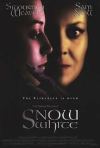
Snow White: A Tale of Terror (1997)

This is a pretty good remake of the Snow White story. The story starts off with a couple running in the woods. There's something chasing them down, and it hits the woman, who is pregnant. The woman then tells her husband to save the child rather than her and to keep running. Then we're brought forward to see a young girl, who is Snow White (named Lilli). The father decides to remarry and chooses for his wife a lovely woman named Claudia, of what we later find out comes from questionable origins. Claudia is seemingly normal and nice to Lilli, even years after the wedding. It's actually Lilli who is wildly resistant to this new woman, feeling as though she's replacing her mother. There are subtle hints of Claudia noticing Lilli's youth, but nothing is acted upon. Claudia eventually gets pregnant and is very happy about the child, but due to complications during the birth, she lost both the child and the ability to bear any future children, and it is then that she starts acting crazy. Claudia hints at some point that her mother was a witch, or social outcast of some sort, and after losing the child, she starts consulting this mirror that was given to her by her mother. She then begins to hear her reflection say things to her, and it eventually suggests that she get rid of Lilli. From this point on the story is pretty typical, but the dwarves aren't all small people, but in fact discontented peasants who actually want to kill her at first. And in this version she may or may not end up with the 'prince'.

I liked this version. It had all of the main elements of the traditional Snow White story, but with a bit of a twist. It still had that old-time feel and was set in the past, all of the main players were present, but some of the more minor details were changed just enough to give the story a fresh feel. Sigourney Weaver played the 'evil queen', and I thought she did a pretty good job. Actually, I bring up this movie just to say her name out loud, it's an interesting one. I don't know if this is a keeper, but if you like the Snow White story, you will probably find this interesting.


Sunday, 26 February 2012

The Shop Around the Corner (1940)

This movie is about a man, Alfred Kralik, who works as a sales clerk in a boutique. One day a woman, Klara Novak, comes in asking for a job, and he tells her that there aren't any available positions. However, that very same day the owner of the store orders this cheap, impractical, musical cigar box, and Alfred said that no one would want to buy them. Klara successfully sells one of these cigar boxes and is hired. Klara and Alfred have not been getting along together at work, both thinking that the other is haughty or pretentious based on that first encounter.

One day, the boss decides that the window display of the store is old and ineffective, so decides that everyone will have to stay after work to change it. Unfortunately both Klara and Alfred need the night off. They've both been exchanging letters with strangers, strangers that seem to be their ideal partners, and they both happen to be meeting their pen pal that very night. Klara succeeds in getting the night off, but when Alfred asks his boss if he could leave early, he ends up getting fired! Feeling very down, he and his friend go to check out what his pen pal looks like, as he's thinking of marrying this girl. He didn't want to go in to meet her, now that he'd lost his job and had no way to support her. His friend looks in the window and tells him that the woman waiting for him looks like Klara, and it turns out that it is Klara. He goes in to talk to her and after a good deal of talking, and a little taunting on his part, she ends up insulting him, and he leaves her be.

Back at the shop, the boutique owner, Mr. Matsuchek, hired a private investigator to find out who his wife was sleeping with (he thought before that it was Alfred). He is about to kill himself when one of his delivery boys walks in and stops him. Mr. Matsuchek begins to recover and gives Alfred his job back, making him the manager of the store. Alfred begins getting close to Klara again, knowing that she was the one whose letters he fell in love with. Will he ever reveal himself to her? And will she still love him when she knows who her mystery pen pal is?!

This movie is the original 'You've Got Mail'. There was another movie along the same lines with Judy Garland called 'In the Good Old Summertime' if you're a fan of the storyline, which seems to be timeless. This movie is sweet, but practically so. The characters don't really go out of their way to be together. I don't know that I felt much of a connection between Stewart and Sullivan, the spent most of the film at odds and not that much time in love. I wouldn't say that it's one of the most romantic movies ever made, but it's a charming film sure to please!