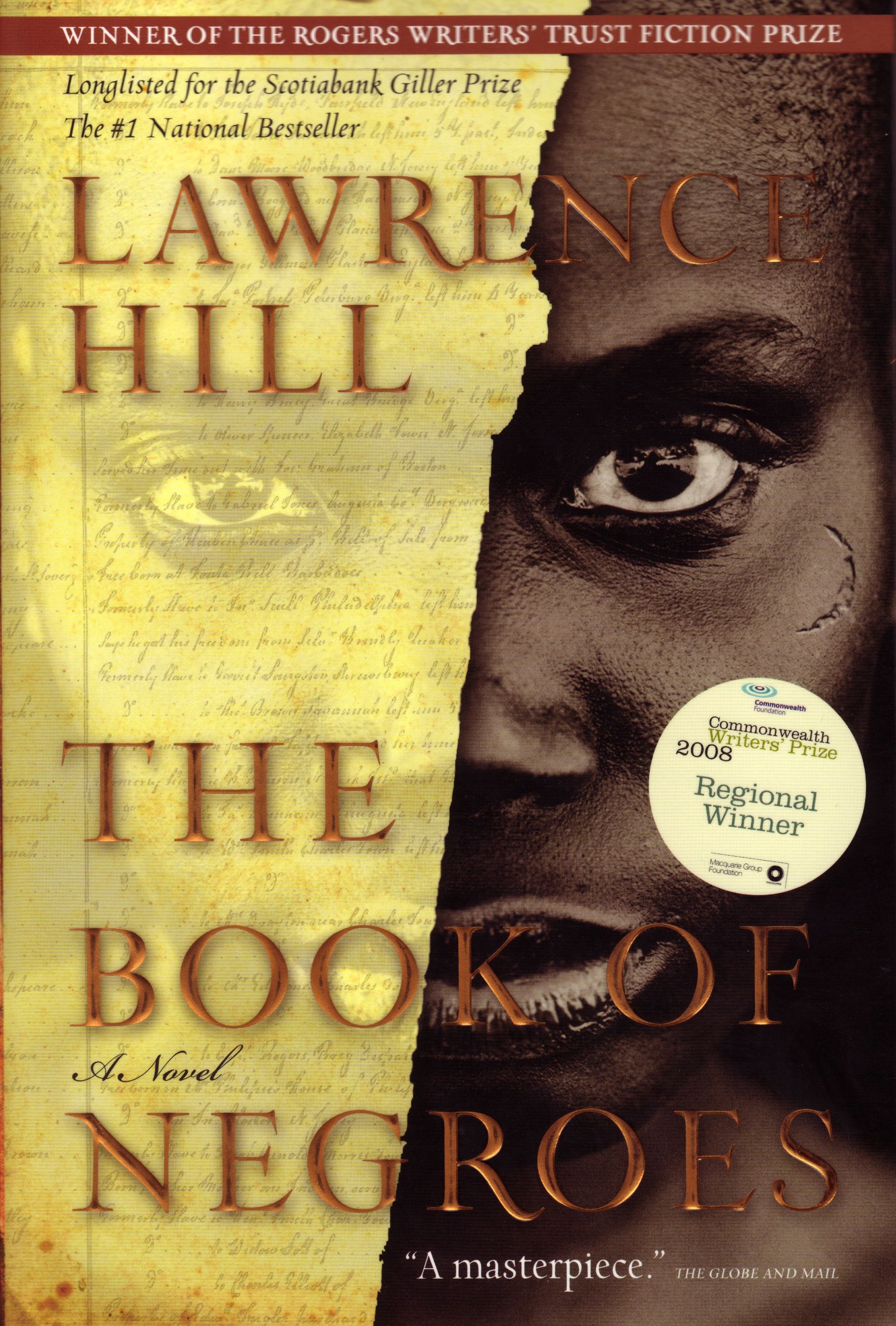
This was a very engaging story about the slave trade circa the 1800's, told by a woman from Africa named Aminata.
The story begins when Animata is a young girl living with her parents in an African village called Bayo. From a young age, Aminata has learned from and helped her mother in midwifery, and it was on one of these journeys to help her mother deliver a new baby that they are set upon by slave traders. Her mother is killed in the conflict, but Aminata and the village slave (who had accompanied them for protection) are captured and yoked in line with a several other captives. After a gruelling three-month journey to the coast, they are put on a slave ship. Aminata's mother was from another village before she married, so was able to teach her daughter the language from her home town. This bilinguality, as well as the fact that she was able to serve as a midwife, earned Aminata some distinction with the ship's captain. For a time she was spared some of the horrors found below deck, that's not to say she did not still witness horrifying things.
When the boat lands, Aminata is auctioned off to an indigo grower in the southern US. Here she meets several people who teach her various things, including the very scandalous act of reading. She also reconnects with a boy who she had met during her capture and eventually marries and has a child with him, but both she and her child are sold to different owners once the plantation owner learns of the child's birth. Animata is then sold to a Jewish indigo inspector who greatly advances her reading ability and uses her to keep his books, all the while using her previous skills to get her by. She eventually ends up going to various other locals, gains her freedom, and constantly seeks to reconnect with her loved ones, further establish her independence. Meanwhile, she must constantly battle oppression, racism, poverty, and heartache.
What I really enjoyed about this novel was its attempt at telling the story it had to tell without demonizing anyone, and all around sparing the reader of a pity party. That is not to say that the events in the novel were trivialized or excused, but rather that the heroine never took the time to whine about her situation, she just kept pushing forward. At one point she even states that she's not an emotional person and I think that helped with the authenticity of the storytelling. It was more as though she was bearing witness, but she was still very present in the storytelling process. The author made a point to not paint a black and white (so to speak) picture of the situation. Aminata and her family were muslim, which varies from the rest of her village, and from what the average reader would expect. This also hints at a previous cultural interaction and exchange. The idea of racism and slavery is also blurred a bit. In Aminata's village, there a village slave who plays a small role in the book, which also speaks to the fact that slavery was not invented with the black slave trade and that slavery in fact may have existed within Africa by the very people who later became slaves themselves. Also, when Aminata becomes a slave of the Jewish man, and even how the slaves born in America view the African-born slaves complicates the idea of discrimination in the book.
Aminata was a very strong heroine. Even though she was faced with extreme hardship and faced countless struggles, she not only never gave into despair, she proactively used her skills and intelligence to survive and progress. She gave herself purpose and constantly strove to better her situation.
Showing posts with label canada. Show all posts
Tuesday, 30 July 2013
Saturday, 27 July 2013
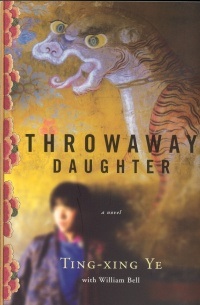
Throwaway Daughter by Ting-xing Ye
This is the story of a young Chinese-Canadian girl named Grace (Dong-mei) Parker and the struggles she faces when coming to terms with the fact that her birth mother in China gave her up, simply because she was a girl. When Dong-mei was a baby, her mother has left her on the steps of an orphanage with nothing more than a slip of paper with both her and her mother's name on it, and because of this fact, Grace had always been reluctant to learn about her heritage or her roots. Dong-mei (Grace) was then misdiagnosed as being deaf, and because of her imperfection was able to be adopted by a family in Canada.
Grace was openly resistant to any attempts made by her adopted mother to connect her with her past or heritage. Eventually as she grew older however, she becomes less resistant and more curious about why her mother could have abandoned her on the steps of an orphanage, and after years of taking Mandarin lessons (at the insistence of her adopted mother), she chooses to go to China for a business course, and to find some answers about who her mother was, and how she could be so cruel. When she makes the trip to find her roots and the people who gave her up, she learns a different side to her story, and is introduced world drastically different world from the one she was raised in, which gives her some perspective on what happened to her, and on just how the woman who was her birth mother could have just thrown her away.
This story did a good job of explaining the culture of China at that time and how people could have given up their female children. It doesn't excuse the action by any means, but it provides the reader with context and understanding. The story is told from each of the character's perspectives as the novel progresses, so as events occur we are able to live the situation through the eyes of Grace's adopted parents as they deal with trying to connect her with her roots, as well as Grace's while she is resisting. We see the motivation and thought processes going on in her grandfather and father and family as they demonstrate life before Grace was even born, and then the expectations and ideas they had while her birth mother was pregnant. The author does a good job of not demonizing any one individual, but rather painting a picture of the time, which helps place the reader in the character's positions and helps to explain some of the choices they thought were necessary to make.
The novel is written for a teen audience, but does not insult anyone's intelligence. It's very readable. Upon beginning the first chapter I was a little bit put off by Grace's complaining, but was happy to discover that that was not the tone of the novel and was drawn in shortly after. This is a very quick read with a moving plot line, I recommend picking it up.
Grace was openly resistant to any attempts made by her adopted mother to connect her with her past or heritage. Eventually as she grew older however, she becomes less resistant and more curious about why her mother could have abandoned her on the steps of an orphanage, and after years of taking Mandarin lessons (at the insistence of her adopted mother), she chooses to go to China for a business course, and to find some answers about who her mother was, and how she could be so cruel. When she makes the trip to find her roots and the people who gave her up, she learns a different side to her story, and is introduced world drastically different world from the one she was raised in, which gives her some perspective on what happened to her, and on just how the woman who was her birth mother could have just thrown her away.
This story did a good job of explaining the culture of China at that time and how people could have given up their female children. It doesn't excuse the action by any means, but it provides the reader with context and understanding. The story is told from each of the character's perspectives as the novel progresses, so as events occur we are able to live the situation through the eyes of Grace's adopted parents as they deal with trying to connect her with her roots, as well as Grace's while she is resisting. We see the motivation and thought processes going on in her grandfather and father and family as they demonstrate life before Grace was even born, and then the expectations and ideas they had while her birth mother was pregnant. The author does a good job of not demonizing any one individual, but rather painting a picture of the time, which helps place the reader in the character's positions and helps to explain some of the choices they thought were necessary to make.
The novel is written for a teen audience, but does not insult anyone's intelligence. It's very readable. Upon beginning the first chapter I was a little bit put off by Grace's complaining, but was happy to discover that that was not the tone of the novel and was drawn in shortly after. This is a very quick read with a moving plot line, I recommend picking it up.
Friday, 30 July 2010
The War Between Us (1995)
This movie is a few years old and was a straight to tv production as far as I can tell. And seeing as how I can't seem to find it anywhere else, I would assume it was only on for those couple of runs that I saw it... but it was one of the best films on how the Japanese were treated in Canada during world war 2.
The story features 2 families, the Kawashima family and the Parnham family. When world war 2 took place, the Kawashima family was uprooted from their lovely home and successful business in Vancouver, British Columbia, and forced to move to a low-income mining town. This came as something of a shock to the family because though Mr. and Mrs. Kawashima were not born in Canada, their children were and Mr. Kawashima served in the Canadian army during world war 1. One of the very vibrant images I have of this film is watching the Japanese family move into this little shack of a house from the perspective of their neighbours, the Parnhams. The family is obviously wealthy. The women wearing fur coats and have fashionable hair and make up, the men in suits, the ornate furniture and belongings they have brought with them to their new home, and how all of this so obviously clashed with the poverty-stricken area, the dirt roads and floors, and even the shabbiness of the cart carrying their things.
The eldest daughter of the Japanese couple, Aya, ends up becoming a housekeeper for the Parnhams. Ed, the husband, is open- minded about their new neighbours, but his wife Peg is more skeptical and treats Aya like a maid. By the end of the movie though, Peg has warmed to Aya and she becomes one of Peg's closest friends. The Parhnams have a young daughter, Marg , and she is very curious about the new neighbours. She starts hanging around their house and asks her already nervous mother questions about what she sees there. She completely immerses herself in the culture of the new family and the other Japanese people there. By the end of the film the family discovers that the government sold their house and business without their consent, and to add to the insult they are to be deported back to Japan, even though they are Canadian citizens and their children have never been to Japan. The final scene in the movie has the Kawashima family in the back of a truck, being driven away and Marg running after them in a little Kimono.
This movie is a really good film, both in terms of its historical content as well as in terms of it just being a good film. The acting was well done and I could relate to all of the characters. I was probably in elementary school when I saw it, but I really enjoyed it and I think that the movie's ability to hold my attention and imprint itself in my memory says something about the storytelling.
I cannot find a movie cover for this anywhere, it's not on amazon or any other site I can find, so here is the imdb page http://www.imdb.com/title/tt0114892/
The story features 2 families, the Kawashima family and the Parnham family. When world war 2 took place, the Kawashima family was uprooted from their lovely home and successful business in Vancouver, British Columbia, and forced to move to a low-income mining town. This came as something of a shock to the family because though Mr. and Mrs. Kawashima were not born in Canada, their children were and Mr. Kawashima served in the Canadian army during world war 1. One of the very vibrant images I have of this film is watching the Japanese family move into this little shack of a house from the perspective of their neighbours, the Parnhams. The family is obviously wealthy. The women wearing fur coats and have fashionable hair and make up, the men in suits, the ornate furniture and belongings they have brought with them to their new home, and how all of this so obviously clashed with the poverty-stricken area, the dirt roads and floors, and even the shabbiness of the cart carrying their things.
The eldest daughter of the Japanese couple, Aya, ends up becoming a housekeeper for the Parnhams. Ed, the husband, is open- minded about their new neighbours, but his wife Peg is more skeptical and treats Aya like a maid. By the end of the movie though, Peg has warmed to Aya and she becomes one of Peg's closest friends. The Parhnams have a young daughter, Marg , and she is very curious about the new neighbours. She starts hanging around their house and asks her already nervous mother questions about what she sees there. She completely immerses herself in the culture of the new family and the other Japanese people there. By the end of the film the family discovers that the government sold their house and business without their consent, and to add to the insult they are to be deported back to Japan, even though they are Canadian citizens and their children have never been to Japan. The final scene in the movie has the Kawashima family in the back of a truck, being driven away and Marg running after them in a little Kimono.
This movie is a really good film, both in terms of its historical content as well as in terms of it just being a good film. The acting was well done and I could relate to all of the characters. I was probably in elementary school when I saw it, but I really enjoyed it and I think that the movie's ability to hold my attention and imprint itself in my memory says something about the storytelling.
I cannot find a movie cover for this anywhere, it's not on amazon or any other site I can find, so here is the imdb page http://www.imdb.com/title/tt0114892/
Labels:
anne wheeler,
canada,
film,
japanese,
japanese canadian,
movie,
racism,
ww2
Wednesday, 14 October 2009
Road to Avonlea- Season 2
The second season of Road to Avonlea is just as lively and full of character and spunk as the first one. The first season ended with Sarah deciding to stay in Avonlea with her family instead of returning to Montreal with her father, and the second season takes up where the first left off. This season focuses on allowing the audience to acquaint themselves with the residents of Avonlea, instead of using the people of Avonlea to develop Sarah's character, which is what I felt the first season did more. In many of the episodes Sarah doesn't play an inciting role as she did in the first season, she's just more along for the ride here, which unfortunately foreshadows future seasons. I personally most enjoy the episodes that focus on the king family, and while I value and enjoy the time given to going into the lives of some of the other town members, I wanted the story to focus more on the king children/ adults. I loved Marilla and Rachel in Anne of Green Gables, I already know who they are and have watched the Anne movies enough times over to have familiarized myself with their personalities and dynamic. Seeing them in Road to Avonlea is nice and provides familiarity, but I find that I don't really enjoy the episodes focused on them as I do when they're just side characters as I already know who they are.
The focus on other people provides the viewers with an outside perspective of the King family. This is one of the reasons this show is so rich and intricately woven. The story isn't told from just one perspective, but from many perspectives. So one minute we are seeing from the perspective of one person, and the next from another who shows us a different perspective on the first person. So for example, if we were to see from Hetty King's perspective, we would see her pride and sense of honour and need to do what's right, but from say, Rachel Lynd's perspective, or many of the other town's people, even Sarah sometimes, Hetty is stubborn and heartless and cares only for the King name. so we get two sides of the story.
This is as good, if not better than the first season as the children are a bit older, and therefore a bit better at acting, and the characters and story are fleshed out a bit more. Great continuation.
The focus on other people provides the viewers with an outside perspective of the King family. This is one of the reasons this show is so rich and intricately woven. The story isn't told from just one perspective, but from many perspectives. So one minute we are seeing from the perspective of one person, and the next from another who shows us a different perspective on the first person. So for example, if we were to see from Hetty King's perspective, we would see her pride and sense of honour and need to do what's right, but from say, Rachel Lynd's perspective, or many of the other town's people, even Sarah sometimes, Hetty is stubborn and heartless and cares only for the King name. so we get two sides of the story.
This is as good, if not better than the first season as the children are a bit older, and therefore a bit better at acting, and the characters and story are fleshed out a bit more. Great continuation.
Thursday, 3 September 2009
The Hollow Tree by Janet Lunn
I really enjoyed this book when I was younger, and read it more than once.
It is a story about a girl named Phoebe in the time of the American revolution. Phoebe's father was a rebel in the war and was killed, so she had to go live with her loyalist relatives. Her elder cousin was fighting in the war as a loyalist, but was caught for being a spy and hanged. As children, Phoebe and her cousins were close and they would play games or send messages by leaving each other notes in a hollowed out tree. After her cousin's death, Phoebe goes to this tree and discovers an undelivered mission that her cousin was unable to complete, so she takes it upon herself to deliver the message. She sets out on her own and travels over a mountain, picking up a stray cat and a bear cub on the way. After she got across the mountain she meets up with a group of loyalists traveling to Canada so they won't be killed for supporting the king. She travels with them for a while before going to complete her mission.
I'm not sure whether or not this person actually existed in history, but if she didn't, this story sort of mimics the Laura Secord story. It's a fast paced novel with action, adventure, and a bit of romance. It's well researched and overall, and enjoyable read.
It is a story about a girl named Phoebe in the time of the American revolution. Phoebe's father was a rebel in the war and was killed, so she had to go live with her loyalist relatives. Her elder cousin was fighting in the war as a loyalist, but was caught for being a spy and hanged. As children, Phoebe and her cousins were close and they would play games or send messages by leaving each other notes in a hollowed out tree. After her cousin's death, Phoebe goes to this tree and discovers an undelivered mission that her cousin was unable to complete, so she takes it upon herself to deliver the message. She sets out on her own and travels over a mountain, picking up a stray cat and a bear cub on the way. After she got across the mountain she meets up with a group of loyalists traveling to Canada so they won't be killed for supporting the king. She travels with them for a while before going to complete her mission.
I'm not sure whether or not this person actually existed in history, but if she didn't, this story sort of mimics the Laura Secord story. It's a fast paced novel with action, adventure, and a bit of romance. It's well researched and overall, and enjoyable read.
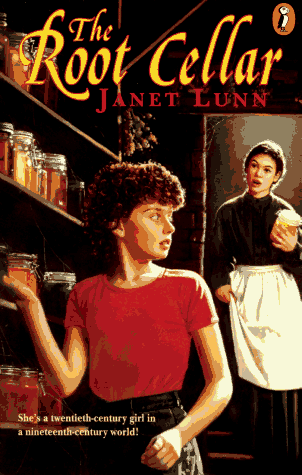
The Root Cellar by Janet Lunn
I read this book back in elementary school, and I enjoyed reading it at the time.
The story follows this orphan girl named Rose who is sent to live with relatives after the death of her grandmother. Rose is something of a tomboy and doesn't really have any friends, so doesn't feel like she fits in when she arrives and spends a lot of time by herself. One of the places she likes to spend time in is a root cellar near the house, and one day she goes into it only to find herself transported back in time to the 1800's. There she meets a boy and a girl with whom she becomes friends. At that time the Civil War was going on, so the boy goes off to fight in it, and the sister and Rose then go off in search of him.
It's a good story about a girl finding a place for herself to be accepted and needed, and be finding that she gains a little more self-confidence by focusing more on how to help others. It's fun and adventurous and even throws a bit of history in there as well.
The story follows this orphan girl named Rose who is sent to live with relatives after the death of her grandmother. Rose is something of a tomboy and doesn't really have any friends, so doesn't feel like she fits in when she arrives and spends a lot of time by herself. One of the places she likes to spend time in is a root cellar near the house, and one day she goes into it only to find herself transported back in time to the 1800's. There she meets a boy and a girl with whom she becomes friends. At that time the Civil War was going on, so the boy goes off to fight in it, and the sister and Rose then go off in search of him.
It's a good story about a girl finding a place for herself to be accepted and needed, and be finding that she gains a little more self-confidence by focusing more on how to help others. It's fun and adventurous and even throws a bit of history in there as well.
Labels:
adventure,
book,
canada,
civil war,
historical,
lunn,
time travel,
young adult
Tuesday, 25 August 2009
Fairy Faith (2001)
This is a documentary about the fairy faith, or the belief in fairies. The narrator takes the viewer around various places in Canada and the UK, talking to people who believe and looking at locations of relevance. Though it isn't the most well done documentary I've seen it is pretty good and it's the only documentary I've seen done on fairies. The film doesn't try to convince the audience of anything nor disprove anything. It attempts to achieve an unbiased perspective, taking in the opinions of those who believe and those who don't (mostly the believers though, as we're looking at the belief, not a criticism of the belief). I think it successfully documents the fairy faith and does a good job of taking seriously subject matter which the majority of western society sees as nothing more than fantasy and idle past time.
I would recommend this to everyone interested in fairies, and anyone with an open mind, because though it isn't asking for the viewer's belief it is asking for the viewer's acceptance of the belief. An iinteresting study.
Friday, 17 July 2009
Anne of Green Gables: The Collection
Anne of Green Gables is a great movie series. Every time I watch it in get caught up in the whimsy and romance and innocence present in both the story line and the characters themselves.
The story is about a young orphan girl, Anne, who is sent by mistake to an elderly couple in Prince Edward Island who wanted to adopt a boy to help out around the farm. The couple were unhappy with the mistake at first, but ultimately decide to keep her. Anne has a penchant for getting into trouble. She has a lot of pride and a hot temper when she thinks that someone is trying to belittle or make fun of her, and this temper gets her into quite a bit of trouble as the series progresses. She always manages to get out of them however, endearing herself to the other characters in the story, as well as to the viewer. She is constantly loosing herself in fantasy and whimsy, as a defense mechanism to deal with the rejection and pain she's had to deal with. The result is that her head is constantly in the clouds, more in the beginning of the series. She begins to live more in the real world as she receives love and acceptance from those around her. We follow her through school, friendships, family, and romance.
Anne is such a great character. Despite the seemingly head-in-the-clouds quality to her, she is a very strong character. She meets every challenge head on with everything she has. She's both romantic and passionate, romantic both in the relational and idealistic sense. She sees the world through dreamy eyes and is constantly in search of true, strong relationships, 'bosom friends'. She is also very optimistic, but not naively so, like in a Pollyanna-ish sense. She always allows for the best possible outcome, and strives for perfection, but is aware that bad things light happen, because they have already. She's ready to deal with what may come, and has already dealt with a lot in her young life, but still refuses to succumb to the drudgery and depression of the world. The romance between her and Gilbert Blythe is also very sweet... I think we'd all like to meet a Gilbert Blythe.
The story is about a young orphan girl, Anne, who is sent by mistake to an elderly couple in Prince Edward Island who wanted to adopt a boy to help out around the farm. The couple were unhappy with the mistake at first, but ultimately decide to keep her. Anne has a penchant for getting into trouble. She has a lot of pride and a hot temper when she thinks that someone is trying to belittle or make fun of her, and this temper gets her into quite a bit of trouble as the series progresses. She always manages to get out of them however, endearing herself to the other characters in the story, as well as to the viewer. She is constantly loosing herself in fantasy and whimsy, as a defense mechanism to deal with the rejection and pain she's had to deal with. The result is that her head is constantly in the clouds, more in the beginning of the series. She begins to live more in the real world as she receives love and acceptance from those around her. We follow her through school, friendships, family, and romance.
Anne is such a great character. Despite the seemingly head-in-the-clouds quality to her, she is a very strong character. She meets every challenge head on with everything she has. She's both romantic and passionate, romantic both in the relational and idealistic sense. She sees the world through dreamy eyes and is constantly in search of true, strong relationships, 'bosom friends'. She is also very optimistic, but not naively so, like in a Pollyanna-ish sense. She always allows for the best possible outcome, and strives for perfection, but is aware that bad things light happen, because they have already. She's ready to deal with what may come, and has already dealt with a lot in her young life, but still refuses to succumb to the drudgery and depression of the world. The romance between her and Gilbert Blythe is also very sweet... I think we'd all like to meet a Gilbert Blythe.
Thursday, 9 July 2009
Canada by Daryl Benson
The photos in this book were breathtaking! The colours are amazing, almost so much so that you'd think them to be surreal, but they're just brilliantly captured moments in time... that really make the landscape breathtakingly beautiful. There are also sepia and black and white shots. Those also look amazing because of the angles from which they were shot as well as the texture of the photos themselves, as some seem almost blurry or hazy, dreamlike. Granted I don't look at books like this on a regular basis, but I've never seen a collection of pictures that so beautifully exhibit natural landscapes and settings as are put together in this book. It's nice.
Wednesday, 8 July 2009
Souvenir of Canada (2006)
I was walking through my semi local video distribution.. place, when I came across this film. The title reminded me of something cheesy, an equivalent to that DVD with the burning log (why), but I saw that Douglas Coupland was the narrator so I took a closer look.
As with any attempt at a representation of a collective identity... not everyone will agree on this summation of 'Canada', and Coupland states this in the movie, that trying to pin down 'Canada' is like trying to hold onto water, or something to that effect, and it's true. Especially something like Canada, which takes pride in the fact that so many different perspectives comprise our nation as a whole. the whole cultural mosaic thing, but at the same time, there are some things that people living in this country will all be able to relate to, and Coupland attempts to gather some of these objects and ideas, all of a physical nature.
Coupland approaches this 'finding of Canada' two ways. First, he uses his own history as a sort of example for some of the concepts he comes up with. While this might seem problematic, as we're not all from not only that part of Canada, but have different backgrounds/ family dynamics/ etc., the fact that he uses his own story as a foundation didn't get in the way of my relation to the main points he was making. The relation to nature, the relation to the space... I couldn't apply all of what he said to my own experience, but I could relate everything he said to someone I know, if not to myself.
And the second part was he went about building this 'Canada house', which was essentially a house he had painted completely white inside and filled with different items of Canadiana. It was interesting to see what he included.
While I don't think this is by any means a full picture of what a Canadian identity is, it's definitely a start. Sometimes it's hard to see your own identity because you're too close to the subject, and maybe taking an outsider's perspective helps with the analysis. It was an interesting movie, quirky. I'd definitely pick up the book.
As with any attempt at a representation of a collective identity... not everyone will agree on this summation of 'Canada', and Coupland states this in the movie, that trying to pin down 'Canada' is like trying to hold onto water, or something to that effect, and it's true. Especially something like Canada, which takes pride in the fact that so many different perspectives comprise our nation as a whole. the whole cultural mosaic thing, but at the same time, there are some things that people living in this country will all be able to relate to, and Coupland attempts to gather some of these objects and ideas, all of a physical nature.
Coupland approaches this 'finding of Canada' two ways. First, he uses his own history as a sort of example for some of the concepts he comes up with. While this might seem problematic, as we're not all from not only that part of Canada, but have different backgrounds/ family dynamics/ etc., the fact that he uses his own story as a foundation didn't get in the way of my relation to the main points he was making. The relation to nature, the relation to the space... I couldn't apply all of what he said to my own experience, but I could relate everything he said to someone I know, if not to myself.
And the second part was he went about building this 'Canada house', which was essentially a house he had painted completely white inside and filled with different items of Canadiana. It was interesting to see what he included.
While I don't think this is by any means a full picture of what a Canadian identity is, it's definitely a start. Sometimes it's hard to see your own identity because you're too close to the subject, and maybe taking an outsider's perspective helps with the analysis. It was an interesting movie, quirky. I'd definitely pick up the book.
Road to Avonlea season one
At times the acting was somewhat contrived, but overall I'd say the actors did a great job. Even where the actors didn't quite do it for me, the characterization and plot stepped in and changed my mind. The characters are really compelling and they all have a story to tell. They have fire and spunk, even the quiet ones or the ones who barely make their presence known. The main characters had very strong personalities. Sarah is very proud and stubborn and little to nothing will get in her way enough to stop the course of action she's chosen... but at the same time she's reserved and thoughtful. Aunt Hetty is also very stubborn and strong (.. pretty much all of the women in this series have
The episodes are basically events that open up the community a bit in some way or another, and Sarah's always the cause. it's kind of like that movie Pollyanna in that respect, but much more multifaceted.
This series isn't half as well known as it should be, but I find that those who know about it tend to really love it. And just a note. Make sure that if you watch this series, you watch the version produced by Sullivan Entertainment and not Disney. Disney chopped out pieces of the story and changed the music, their version is called Tales from Avonlea. Stay away.
Subscribe to:
Posts (Atom)