Showing posts with label book. Show all posts

Monday, 18 November 2013

Legends, Icons, and Rebels: Music that changed the world by RobbieRobertson

Iconic musician Robbie Robertson (member of The Band) collaborated with some other people, Jim Guerinot, Jared Levine, and Sebastian Robertson to create this children's non-fiction book about some of the great musicians of the past who have helped to shape modern-day rock and roll.

The book covers a brief summary of 27 artists, including: Stevie Wonder, Chuck Barry, Aretha Franklin, Joni Mitchel, Patsy Cline, Bob Dylan, and many more. It covers a brief summary of their careers, with a few lesser known facts thrown in, and then on two accompanying CDs, featuring one of their songs.

This is a brilliant book, and I hope it becomes popular. I'm not a huge musical aficionado myself, but I have a broad range of tastes that span both genre and year, but I would say that I'm in a minority of people who regularly listen 'classic' rock and roll or RnB. But these artists in this book, and many more, produce really great music that has not only shaped an age and the music we listen to today, but that is really great to listen to.

That's not to say that today's music is not good. There are several current artists and songs that are good, but to better appreciate their work, you must have a better understanding of the history they draw from and have risen out of. Once you understand where they're coming from, you can understand what they're doing differently, and how they are maybe revolutionary in their own way. The biggest thing of all however is that the music of the past is just really great! Sometimes we're tempted to stop listening to the music of the past because newer music comes out, but the music from the past is still really great. In fact, some of the music from the past is arguably better than some of the modern music on the radio. Some might argue that the... music of lesser quality... or today exists because not many people listen to the better, older music, and have nothing else to compare it to. But that's getting a bit hipster and kind of arrogant, so we won't push too hard in that direction.

This is a coffee table book for kids, so even kids who aren't 'readers' per say will be able to enjoy it, along with the CDs. I really applaud this effort. Definitely look for it, and let it be the doorway to introducing the kids in your life to some really great songs!

Sunday, 27 October 2013

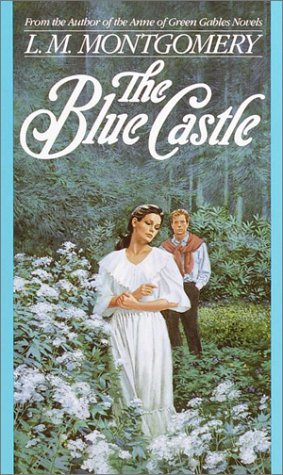
The Blue Castle by L.M. Montgomery

This is a sweet novel about a woman who, after being repressed all of her life, breaks free.
Valancy Stirling is a twenty-nine year old woman, unmarried, living with her mother and elderly cousin in turn of the century Ontario. Valancy is your textbook old maid. She's not very pretty, is quiet and subdued, and has never once been anyone of distinction. Every day of her life has been a disappointment and all she's ever wanted was one day of happiness, little does she know, her life is about to change forever. After a small act of rebellion, she decides to visit a heart doctor about some odd palpitations she's been having. She eventually learns that she has a very serious heart disease and has maybe a year to live. Valancy decides to stop living in fear of what other people might think or say, and starts doing and saying things she's always kept inside. She also leaves her mother's house to go work as a caretaker of an ill girl whom she went to school with who had an illegitimate child, and who's father was a known town drunkard, much to the horror and disapproval of her family. There is a man named Barney Snaith who visits this house on a regular basis to visit these people, and who holds something of a speculatively dubious reputation himself. As Valancy interacts with these people more and follows her own thoughts and wishes above those of other people's, and is finally needed by others, she begins to grow into the person she has always wanted to be.
The author was a bit wordy at times, giving descriptions that were a little too long about family members or situations or even quotations from novels Valancy enjoyed, but overall these didn't detract from the plot overmuch. There were also some annoying spelling errors, Valancy spelled Valance, Snaith spelled Smith, 'an' instead of 'a', things like this. They were few and far between, but still noticeable. I don't really find these annoying as I find it kind of a game to spot these errors in novels, but if that does annoy you they are here. They story is better than it's errors though, so I would recommend that you read it despite the spelling.
This was a very sweet novel. We are introduced to Valancy in all of her spinsterly misery. She was born into a tight-knit, very judgmental, upper middle class family. Her family does, and always has, pick on her for being unmarried and unattractive, and generally ignore her if they're not using her as a butt of one of their jokes. However, there is a hidden fire in Valancy that no one in her family can guess at, and after discovering her imminent death, decides that she need not be a slave to her fear anymore and let that fire out, as she won't be alive to have to deal with the gossip-mongering disapproval of her family. Events lead her to be living in the Muskokas, scenic cottage country a couple of hours north of Toronto, and the novel becomes a celebration of nature. The author describes the wildlife Valancy encounters with majesty and splendour. Her descriptions of the lakes and forests are magical. I have been to Muskoka and it was beautiful, but after having read this book I feel that I must go again, in winter this time.
The title of the book, the Blue Castle, makes reference to Valancy's dream castle. The place where she would mentally go when her physical life seemed unbearable. As the novel progresses, the Blue Castle moves from Valancy's dreams to the world she's living in. It represents her happiness, and as she openly becomes the person she has always been inside, her Blue Castle seems that much nearer.
This novel  was written by Lucy Maud Montgomery, the author of Anne of Green Gables, Emily of New Moon and many others. The Blue Castle is one of her few adult novels and holds all of the charm and magic that her young adult novels have. I would definitely pick up this author, not just this book. There have been film adaptions to many of her stories, including: Anne of Green Gables, Road to Avonlea, Emily of New Moon, and Jane of Lantern Hill. If you don't want to read the novels (which I recommend that you do) at least watch the films. They're all heart-warming, charming, slightly romantic stories with strong characters and whimsical prose. Do it.

Saturday, 14 September 2013

The Enchantment Emporium by Tanya Huff

The Gale family is an interesting one. Things seem to work in their favour more often than not, you could even call them special... Or witches, same difference.

Alysha Gale is a 24-year-old who, after losing her job, is forced to move back home with her extended family. Her family is large and in each others business and runs on something of a coven-like structure. The women rule the roost, and power increases with age. Things are normal, if depressing for Alysha, until the day when she receives a letter from her eccentric grandmother, stating that if she is reading this letter, her grandmother is dead. This is concerning news because it takes a lot to kill a Gale woman, and if you attack one you attack them all. Her grandmother's letter instructs her to go across the country to manage a store she was running there, and to settle any affairs she had outstanding. When she makes her way to her grandmother's store, she finds that the store is not as ordinary as your normal junk shop may be, nor are its patrons, and not is the town. On top of the everyday weirdness, she discovers that a sorcerer (not a friend to witches) has sent his apprentice to keep an eye on Alysha to make sure she doesn't interfere with his... plans. There's a big threat coming to town, and if the sorcerer's afraid, it's definitely something powerful and not good. What will Alysha do about the apparent danger in the city, not to mention some... interesting characters she comes across.

I enjoyed this novel, though it took a while to get off the ground. The author sort of just throws the reader into the culture of this family without really taking time to explain the rules or behaviours. In a way it's interesting because that is how a stranger would approach a culture like that, learning bit by bit along the way. On the negative side however, a more effort is spent at the beginning of the book guessing at what's happening and trying to figure out just who this family is and what they are than your average book requires. This writing technique also subliminally adds to the clannish nature of the family and the difficulty one would have actually getting to know them as an outsider. That said, once you are introduced, the family culture it is pretty intricate and fun. I liked Alysha as a main character. She was lost and unsure of who she was or where she was going pretty much throughout the entire book, but despite that, she always took challenges head on and ultimately had the spirit of a leader and a fighter. That spirit grew stronger as the novel progressed. There was good character development throughout the book. Most of the main characters and even some of the minor characters showed various levels of growth over the span of the story. Both the plot as well as the character development were well thought out and provide the reader with a lot to pay attention to. She also has a lot of fun with the dialogue, letting her characters be both bitingly sarcastic and comfortable with some puns, which can be fun in moderation. Overall this was probably not the best contemporary fantasy I have ever read nor the most gripping, but it is a fun read with interesting characters and an engaging plot.

The author is Canadian and the story takes place in various Canadian cities, so there is a bit of Canadiana that the author plays around with throughout the story, so if you know something about Canadian culture you'll be slightly entertained or annoyed, but if you don't then you might be slightly confused at times.  A disclaimer for younger readers is that there is suggested sexual content. There are no explicit scenes but there is plenty of suggestion, and sex is linked to how the witches manage their power and how the family dynamic works. It's a good in between books book.

Tuesday, 30 July 2013

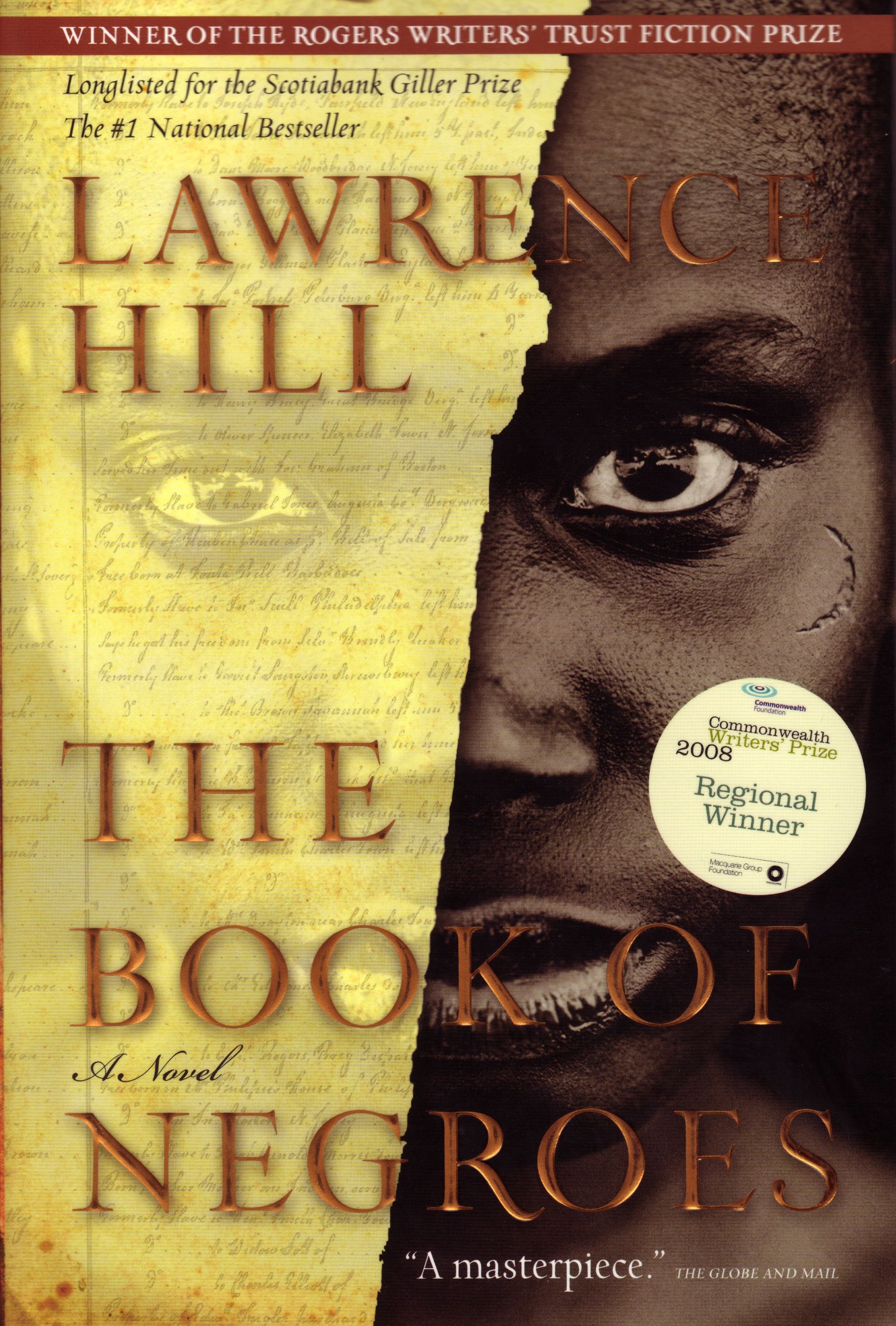
The Book of Negroes by Lawrence Hill

This was a very engaging story about the slave trade circa the 1800's, told by a woman from Africa named Aminata.

The story begins when Animata is a young girl living with her parents in an African village called Bayo. From a young age, Aminata has learned from and helped her mother in midwifery, and it was on one of these journeys to help her mother deliver a new baby that they are set upon by slave traders. Her mother is killed in the conflict, but Aminata and the village slave (who had accompanied them for protection) are captured and yoked in line with a several other captives. After a gruelling three-month journey to the coast, they are put on a slave ship. Aminata's mother was from another village before she married, so was able to teach her daughter the language from her home town. This bilinguality, as well as the fact that she was able to serve as a midwife, earned Aminata some distinction with the ship's captain. For a time she was spared some of the horrors found below deck, that's not to say she did not still witness horrifying things.

When the boat lands, Aminata is auctioned off to an indigo grower in the southern US. Here she meets several people who teach her various things, including the very scandalous act of reading. She also reconnects with a boy who she had met during her capture and eventually marries and has a child with him, but both she and her child are sold to different owners once the plantation owner learns of the child's birth. Animata is then sold to a Jewish indigo inspector who greatly advances her reading ability and uses her to keep his books, all the while using her previous skills to get her by. She eventually ends up going to various other locals, gains her freedom, and constantly seeks to reconnect with her loved ones, further establish her independence. Meanwhile, she must constantly battle oppression, racism, poverty, and heartache.

What I really enjoyed about this novel was its attempt at telling the story it had to tell without demonizing anyone, and all around sparing the reader of a pity party. That is not to say that the events in the novel were trivialized or excused, but rather that the heroine never took the time to whine about her situation, she just kept pushing forward. At one point she even states that she's not an emotional person and I think that helped with the authenticity of the storytelling. It was more as though she was bearing witness, but she was still very present in the storytelling process. The author made a point to not paint a black and white (so to speak) picture of the situation. Aminata and her family were muslim, which varies from the rest of her village, and from what the average reader would expect. This also hints at a previous cultural interaction and exchange. The idea of racism and slavery is also blurred a bit. In Aminata's village, there a village slave who plays a small role in the book, which also speaks to the fact that slavery was not invented with the black slave trade and that slavery in fact may have existed within Africa by the very people who later became slaves themselves. Also, when Aminata becomes a slave of the Jewish man, and even how the slaves born in America view the African-born slaves complicates the idea of discrimination in the book.

Aminata was a very strong heroine. Even though she was faced with extreme hardship and faced countless struggles, she not only never gave into despair, she proactively used her skills and intelligence to survive and progress. She gave herself purpose and constantly strove to better her situation.
image

Saturday, 27 July 2013

Throwaway Daughter by Ting-xing Ye

This is the story of a young Chinese-Canadian girl named Grace (Dong-mei) Parker and the struggles she faces when coming to terms with the fact that her birth mother in China gave her up, simply because she was a girl. When Dong-mei was a baby, her mother has left her on the steps of an orphanage with nothing more than a slip of paper with both her and her mother's name on it, and because of this fact, Grace had always been reluctant to learn about her heritage or her roots. Dong-mei (Grace) was then misdiagnosed as being deaf, and because of her imperfection was able to be adopted by a family in Canada.

Grace was openly resistant to any attempts made by her adopted mother to connect her with her past or heritage. Eventually as she grew older however, she becomes less resistant and more curious about why her mother could have abandoned her on the steps of an orphanage, and after years of taking Mandarin lessons (at the insistence of her adopted mother), she chooses to go to China for a business course, and to find some answers about who her mother was, and how she could be so cruel. When she makes the trip to find her roots and the people who gave her up, she learns a different side to her story, and is introduced world drastically different world from the one she was raised in, which gives her some perspective on what happened to her, and on just how the woman who was her birth mother could have just thrown her away.

This story did a good job of explaining the culture of China at that time and how people could have given up their female children. It doesn't excuse the action by any means, but it provides the reader with context and understanding. The story is told from each of the character's perspectives as the novel progresses, so as events occur we are able to live the situation through the eyes of Grace's adopted parents as they deal with trying to connect her with her roots, as well as Grace's while she is resisting. We see the motivation and thought processes going on in her grandfather and father and family as they demonstrate life before Grace was even born, and then the expectations and ideas they had while her birth mother was pregnant. The author does a good job of not demonizing any one individual, but rather painting a picture of the time, which helps place the reader in the character's positions and helps to explain some of the choices they thought were necessary to make.

The novel is written for a teen audience, but does not insult anyone's intelligence. It's very readable. Upon beginning the first chapter I was a little bit put off by Grace's complaining, but was happy to discover that that was not the tone of the novel and was drawn in shortly after. This is a very quick read with a moving plot line, I recommend picking it up.

image

Friday, 27 January 2012

Kira- Kira by Cynthia Kadohata

Katie is an 11-year-old girl living with her family in the States circa 1950. She lives with her mother, father, sister Lynn, and later, her brother Sammy. Her parents were born in Japan, and back in those days, visual minorities weren't as socially acceptable as they are today. Katie's parents have to work in chicken hatcheries, because in those days Japanese- Americans couldn't do much else in terms of employment. Her sister Lynn eventually shows signs of a strengthening sickness and the story deals with the family's poverty, and the struggles her sister's illness cause, both on an emotional and an economic level. The novel's title, kira-kira, means to sparkle in Japanese. Her very intelligent sister sometimes showed Katie how the world could be amazing, how certain things in life would have a kira-kira.

I wasn't really impressed with this story. It won a Newbery award so I was expecting something good, I didn't end up getting it. Katie was an average kid, with an average intelligence level, and average thoughts, and an average life... which made this story an average book for me. The author would constantly have Katie notice how intelligent other people around her were, how good other people were, or hint at how interesting other people's lives must be. As the author kept doing this throughout the novel, and didn't make Katie's life any more interesting, I began to wish she had told the story from a different perspective. This story could have had a lot to say and could have been very emotional. It takes place in a very interesting time, from the perspective of people who would have struggled at that time, and on top of that their family had a major tragedy. Even with all of this potential, it was still a struggle to keep picking the book up. The author didn't do a good job establishing a connection between the reader and the characters, and as a result I didn't care about what happened to any of them. I kind of wished their situation would keep getting worse, hoping that that would engage me.

At the end of the book Katie talks about the whole kira-kira philosophy of the book and I felt like the concept didn't have enough weight to be presented as though it was present throughout the entire book. The author didn't spend enough time developing that idea or tying it into the events in the book. There were a lot of depressing, unfortunate situations, but no sparkling outlook from Katie's perspective. Maybe in the eyes of another character this idea was more developed... but that really doesn't help the reader as we are only privy to Katie's thoughts.

The book wasn't bad by any means. I know my review is somewhat... completely bashing it, but it wasn't a bad book. It just wasn't what I associate with Newbery books, or great books in general. The story was an average kids book, and I'm sure some kids would enjoy reading it, but the book might not make it to anyone's favourites list any time soon.

Saturday, 5 November 2011

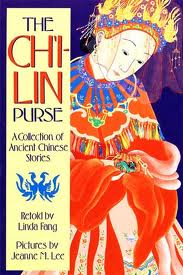
The Ch'i-lin Purse: A Collection of Ancient Chinese Stories Retold byLinda Fang

This is a wonderful collection of stories, both for young children and for older readers. The book has 10 elegantly written short stories. Some are clever, some are funny, some show the value of kindness, but all have universal truths and wise lessons to be learned. The stories are hundreds of years old, but the way they are told keeps them fresh for a contemporary reader, and their messages keep them relevant. There is a pronunciation guide in the back of the book, as well as a sources section telling us a little bit more about each legend. A must for all lovers of stories with a moral.

The Tiptoe Guide to Tracking Fairies by Ammi-Joan Paquette

This is an interactive, mixed-media book about going out into the garden to find fairies. The author took pictures of someone going for a walk around in their garden with some children and drew in fairies here and there. Each page is a different location and the author talks about different things he or she sees around the garden and how it could be related to fairies. For example there will be a circle of grass and the author will say maybe its a fairy bed, or will find a fairy shoe and leave it on a rock for fairies to find later, or wonder where fairies are. All the while the impish drawn in fairies are hiding or prancing about all over the page. It’s a good book about going out to explore your own garden and find the fairies there. It’s not so much a how to guide as it is someone’s account of a thoughtful walk.

I didn’t personally like the book that much. The photographs the fairies were drawn on reminded me of those farm animal picture books they give you in the second grade at school, stale and boring. The writing too. I don’t mind stories with a simple plot or writing style, but children are brighter than this book gives them credit for. Without the little drawings I wouldn’t have picked this book up, and I don’t think any children would either. I don’t mind the idea of a book supporting an outdoor adventure in search of fairies, but this book is borderline boring. It’s a very slow-paced walk through a garden with simple text and uninteresting pictures. The little sprites are cute, but not enough so as to make up for everything else. I may be taking this to a bit of an extreme, but as a lover of fairies I know that a hunt for fairies can be full of wonder and excitement and mystery, and all of that was lost on me when I read this. It’s ok for a quick glance through, but definitely not a purchase.

Sunday, 24 July 2011

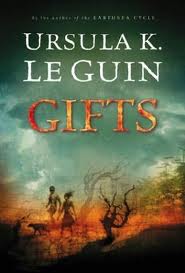
Gifts by Ursula LeGuin

This is the first book of three in a series called The Annals of the Western Shore. The story takes place in a world where magic exists, but only to those who live in the northern territory called the Uplands. To those who live elsewhere, magic is little more than bumpkin superstition. Magic isn't as we traditionally know it in fantastical literature either. In the Uplands, a person is limited to a certain ability they inherit from their ancestors, and the strength of the ability depends on the purity of the bloodline, amongst other things. These abilities are called gifts.

The story is about a boy named Orrec. We begin by learning that Orrec is blindfolded because of the strength of his gift. His is the gift of unmaking, which basically means he has the power to destroy anything he looks at if he wishes it. Orrec's gift was too powerful however and he had no control over it, which is why his father blinded him. The plot basically leads up the that first scene and paints Orrec's life and his struggles with this gift.

More than a fantasy, this is a coming of age story. Orrec is given a powerful 'gift' but has absolutely no control over it, making himself a deadly threat as a result. He tries to match himself to historical figures and satisfy his father's wishes, but no matter how hard he tries, or how seemingly powerful his gift may be, he feels weak and powerless and completely out-of-place. His gift is ironically more of a burden. It's only when he realizes that he must take his power into his own hands and makes it what he wants to be that it truly becomes a gift. We all have 'gifts' or abilities or skills, and they can either be a burden or they can enrich your life. This is the story of Orrec's journey learning how to make his gift be a gift.

Sunday, 3 July 2011

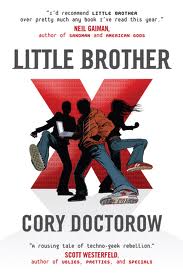
Little Brother by Cory Doctorow

As one can gather from the title, this book is almost a response or a re-imagining of George Orwell's book 1984, one of the most terrifying portraits of society's potential in print. Big Brother is the term in that book for government surveillance. Little brother, then, is an individual's response to his government's intrusion into his privacy and  his creation of a grassroots revolution for freedom.

The main character is a high school student named Marcus. He is an average kid in every respect, save his impressive technological knowledge, and his use of that knowledge to rebel against the systems put in place at his school. He also sometimes plays hooky with friends to play a game. However, things change forever when a bomb goes off in the city in what is assumed to be a terrorist attack. Marcus and his friends get abducted by a branch of the government called National Home Security (NHS) and is interrogated and abused by them and is finally set free, along with all of his other friends except one, who was injured before the abduction. Marcus then takes it upon himself to create an underground network free from the government's surveillance where he becomes a kind of cyber Che Guevara. He begins setting up little things to hinder the NHS, kind of like how he messed with his teachers, but on a much larger scale. As things get more and more intense Marcus finds himself facing an increasingly dangerous reality. He must figure a way to save his country from becoming a police state while still keeping his own freedom and anonymity in tact.

This was a really well thought out book. The author put together a very clever story line with a very active and intelligent protagonist. He puts together situations that seem hopeless and daunting, but then has his characters come up with something to react in a positive way. There is also a lot of  information in the book. Some it technological, some is historical, some literature based. You're likely to learn a little bit reading this book. I love books like this because they inspire learning to go beyond the story and demonstrates how great getting to know more about something can be. In short, this is a very important novel for young people. It is an introduction to the dystopian novel, but with more hope and less futility. It may also inspire the reader to question some of the events or laws going on in their area. It forces you to think, but it's fun and fresh at the same time. In addition, the fact that both Neil Gaiman and Scott Westerfeld are speaking in favour of it was all the propaganda I needed to pick up the book, and they were right.

Sunday, 26 June 2011

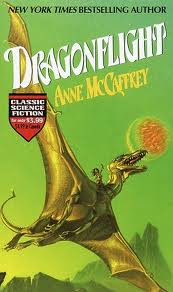
Dragonflight by Anne McCaffery

Dragonflight is the first in a long series of books taking place in McCaffery's land of Pern, a land of dragons and dragon riders. What's interesting about this book is that it's actually a science fiction, not a fantasy. One would think what with the dragons and all that this would be a fantasy story, but alas, the dragons are just a facade for the underlying science fiction plot.

Pern is a land inhabited by humans. Unfortunately, a planet close to Pern gives off deadly spores every couple of years called 'Thread' and these spores fall down onto Pern and destroy everything they come into contact with. Some humans have learned to tame and form a psychic bond with dragons, these people are called dragon riders. It is the dragon riders and their dragons who battle the thread attacks and keep Pern safe from the threat. There have not been any signs of thread for hundreds of years however, and dragon riders have become an anachronism.

The story begins with two prominent dragon riders searching Holds, or different settlements, for young women. A queen egg has been laid and a new Weyrwoman, the female leader of the dragons, must be found to bong with the new queen dragon. They eventually find a young woman pretending to be an old drudge named Lessa, and after dealing the fascist invader controlling their land, the pair take Lessa to their Weyr, the place dragons and dragon riders live. She of course impresses the new dragon queen and so the story begins.

The author paints Lessa as a strong sort of heroine, but in my opinion she spent more time whining and being loudly indignant, which may be considered strength to some, than actually displaying any real strength of character. Her relationship with F'lar, her love interest, was more like that of a defiant child and her disciplinarian. I know this is aimed at teens and they're supposed to be all angsty and everything, but why does romance have to be about a woman defying a man's power over her? There were some other misogynistic messages in the book besides the romance roles which were also somewhat tedious to read through. Then again this was published in the late 60's and that might have been a more popular topic at the time and more widely accepted, or even revolutionary. Remember, this is a science fiction after all. F'lar also displays an exaggerated machismo that almost seems too pig headed to be taken seriously at times. His relationship with Lessa is borderline abusive, which can sometimes be mistaken for romance in romance books directed towards women for some reason. Maybe because of the adrenaline rush caused by the fear that that could happen to you. I really don't know. But there is a lot of yelling and shaking on his part whenever he deals with Lessa as he tried to subdue her. Just something to watch out for.

*Spoiler* If you have yet to read the book don't read this because it will lessen the experience for you. I do have an issue with the time travel aspect of the plot. I like the idea and it was an ingenious plot twist... but the way the author went about incorporating it into the plot doesn't really make sense. Lessa goes back in time to ensure that certain events take place and that just doesn't sit right with me. The idea of traveling back in time goes as follows; a person travels to a point in time that has already occurred. Pretty simple on the surface. The problem in mcCaffery's case is that the past in her story is based on the fact that Lessa discovered that she was supposed to go back in time and change things. So there is no original history that Lessa goes back to change. She gives herself clues in the past that tell her she has to go back in time, which the people there follow because she tells them about the future. The idea of her going back in time might be able to work out... except that the reason she decides to go back isn't because of an organic idea she had based on her evaluating the present and deciding that to save the present she must go back, she comes to the decision to go back in time because of a clue she leaves herself. Even this would be alright if an original, untouched-by-time-travel history is presented, but there isn't one. Despite this flaw I did enjoy the idea, and if it was worked out a bit better it would have been really cool. It was good regardless, but I enjoyed it less because it was illogical. *Spoiler*

Aside from the characters, the plot was actually really well done. It was fast paced, but the author took the time to set up a nice flow. It is definitely a page turner. If you are a fan of fantasy or of dragon lore you will probably enjoy the world McCaffery has created here. It is filled with McCaffery's own lore, which is quite interesting. And if you are a sci fi fan, well there's some time travel in there as well as a bit of outer-worldly threat. Despite it's faults I suggest you pick up this book and give it a go. Aside from the fact that it's a decent read, it's been around long enough to have influenced a lot of today's fantasy/ sci fi writers. Though a bit dry at times, it's a quick read worth the time invested.

Tuesday, 31 May 2011

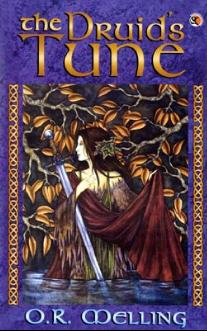
The Druid's Tune by O.R. Melling

The Druid's Tune is by the author of the somewhat well-known series called The Chronicles of Faerie (which are a superb read, aged late elementary school/ early high school, but is really fun for all ages).

This story features a young brother and sister, Jimmy and Rosemary, who are sent to live with their aunt and uncle in Ireland for the summer. While neither are too pleased to be sent away from their friends on their break from school, they decide to try to make the best of what seems to surely be a boring couple of weeks on a farm in some small Irish backwater town. When they arrive they find a very kind and friendly aunt and uncle awaiting the pair at the farm, as well as a strange farm hand hired by their uncle. They sneak out one night, see this farm hand walking toward the small lake near their uncle's property, and decide to follow him. The man begins singing and the two children are knocked unconscious. As it happens, that man was a druid, and by his power they've been transported back in time or between universes to the infamous Queen Maeve's army as she and her men are undertaking The Cattle Raid of Cooley. Along with this figure, Jimmy and Rosemary also meet up with the hero Cúchulainn, the hound of Ulster. Through various bouts of time/ space travel these two bear witness to one of the most well-known epics in Irish folklore, and do their part to help out where they can.

This book was a great read, not only because the character's and plot had some substance, but because it is one of those books that will get kids interested in history and folklore. This story is taken right out of Celtic mythology, The Cattle Raid of Cooley or the Tain Bo Cuailnge is one of the national epic myths in the Irish tradition. If you are unfamiliar, it is on the same scale as The Odyssey or The Aeneid; Cúchulainn would be like an Achilles, the guy Brad Pitt played in Troy. Irish epics aren't as well known as Grecian/ Roman/ English epics, but are just as good, and books like this one will inspire young people, and old people, to look up some of those old stories and educate themselves about times past and people gone.

Aside from inspiring some self-educating, the book was actually a decent read. I was a little bit worried when I figured out that they were going to relive this tale because I didn't want the author to ride on the coattails of the epic and just have some modern-day kids there to put in some wise crack remarks to keep the audience semi interested. Thankfully Melling is a talented author and our protagonists can stand on their own two feet. We actually learn little more than the basics about the myth itself because the author is too busy developing characters and relationships to fill the reader in on a presumably missing literature lesson. Rosemary and Jimmy are both good characters. Gutsy and head-strong, but full of heart. The only issue I'd have is how little trouble the pair had in adjusting to life in the bronze age. The druid is also an interesting character as he seems to be trying to find himself, or enlightenment, for the entire story.

Melling has a talent for inspiring an interest in Celtic myth and legend, in all of her books, not just this one. I suggest you try to read as many as you can get a hold of.

http://www.ormelling.com/index.html

Friday, 29 April 2011

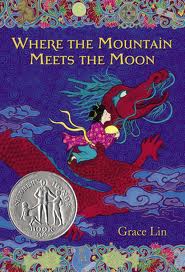
Where the Mountain Meets the Moon By: Grace Lin

This is the story of a poor young girl named Minli. She lived with her parents in a village near Fruitless Mountain, named so for the fact that it was barren due to the anger and pain of a dragon. Every day Minli and her parents worked hard in the rice fields to make just enough rice to feed themselves, and every night Minli would sit with her parents. Her mother would sigh in anger at their misfortune and her father told her folktales about dragons, evil magistrates, and the Old Man of the Moon (an immortal who read from the book of destiny).

One day a goldfish peddler passed through the town selling his wares, saying that a goldfish would increase the buyer's fortune. Hearing this, Minli  took one of the two copper coins to her name and bought a fish. Her mother is furious with her and tells her there that there is barely enough rice for the three of them and that they would never be able to feed another mouth. The night following this conversation, Minli decided that her mother is right and released the goldfish. As soon as she did so however, the goldfish thanked her! She was startled to find the goldfish talking to her, but was told that all goldfish talk, but only those who want to listen can hear. The goldfish then tells Minli how she can find her way to Never Ending Mountain, home of the Old Man of the Moon, so that she could try to change her fortune. This sets Minli off on a journey to try to change her family's fortune. She meets various characters, dragons, goldfish, places, people, all of which she heard of in folk tales and fairy tales.

When I first began reading this book I didn't understand why it had won the Newbery Award. The story seemed pretty typical, kid goes on an adventure, meets some people, learns a lesson, that old thing. But as I read on I found the story to be more than that. All of the folk tales, even the plot itself were taken right out of a Chinese folktale, and all were seamlessly interwoven. If a folk tale was told early on in the story, Minli would interact with the people in that folk tale later on in the plot. So often fantasy and make-believe and imagination is passed off as a foolish waste of time with no practical application in the real world. This story reminds us that folk tales do come from somewhere, that there are lessons we can learn from them that we can apply to our own lives, and most importantly, we can see how stories give Minli and her family hope and happiness.

Sunday, 13 March 2011

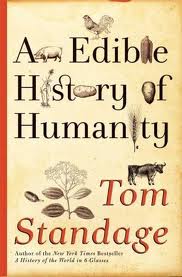
An Edible History of Humanity by Tom Standage

This book is an  interesting look at history from the perspective of how food has affected events in history. It's really refreshing to read about history in a way that isn't directed by political intrigue and war. So often that's the main focus in high school history class that it's difficult to remember that war and governmental disagreements weren't the only things going on in the past. Many more people might actually like history if it was told from different angles, and food is definitely something we can all understand.

The author begins by discussing the dawn of agriculture and how through farming foods like what we now know to be corn, we were able to form towns, cities, and even metropolises. Trade is discussed as is the migration of food from one place to another and how that effected its value, like Indian spices for the rest of the world. That value then inspired Columbus to travel to the Americas looking for a fast, cheap way to get spices and how he brought back foods like corn, potatoes, and more. Corn, wheat, and potatoes are discussed in terms of their value and, in the situation of the potato, how they had to overcome certain stigmas to be widely appreciated. Food is discussed as a crucial aspect of war, and how managing one's food supply gave one army the edge over another, or a country over its people. Food preservation and growing methods also changed the world, and now people use food origins as a social statement of sorts. There are several fascinating chapters from the dawn of man to present day.

The author doesn't say that certain events in history would not have eventually happened if food wasn't the main motivator, but that it was one of the pieces to many of the events that define our past. Food is such a crucial part of our existence; it literally sustains us. It makes sense to look at the role food has played in our decisions, past and present, because without it we wouldn't be. Having a basic knowledge of history will help you better understand the book and piece together the events, but the author writes quite well and describes the situations in some detail, so I'm sure you won't be completely lost if you have no knowledge at all. Overall, a really interesting book.

Also: I listened to this as an audio book, and it was well done, but the narrator has a whistling 's' that gets to be quite annoying. He also tries to do an accent for all of the quotations put into the book and fails at most of them. I'd say he was the worst part of the experience for me, but it's a good book so I recommend reading it.

Saturday, 12 March 2011

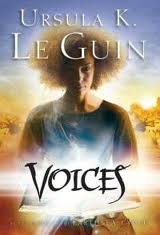
Voices by Ursula le Guin

This is the story about an adolescent girl named Memer. She lives in a city that was conquered by the Alds when she was born and has only known living in an occupied country. Her people were known by other places as a great place for learning and for the world's most comprehensive library, but the Alds feared the written word and believed that it held demons. They also feared the many gods Memer's people worshiped and called them all demons. The Alds had one god they obsessively worshiped, and were fearful of anything else. Ever since she was a girl, Memer often escaped to a secret room in the large house she lived in. Her mother took her there when the city was first being attacked to protect her, as the room was hidden and could only be open by a series of hand movements. The Waylord, the elected leader of their people, found her there and taught her to read. He also shares a house with Memer and becomes a sort of surrogate father for her (Her mother died in the attacks when she was small and she never knew her father as he was an Ald, and though it is very vaguely hinted at, Memer's mother was raped, but chances are most people whom the book is targeted for will miss this fact).

Then one day a storyteller (called a maker in the story) and his companion come to the city. Memer feels an instant draw to these people and, after an incident in the town square, invite them to stay as guests in the Waylords house. The Alds value the spoken word as it turns out and have the maker come to them to tell stories and sing songs. It is with the arrival of these two people that the situation slowly begins to shift. Through Memer, the reader gets to see a little bit more of the Alds, but not too much as Memer's anger toward them is so strong. There are whispers of a revolution, and Memer finds out that there is more to the secret room and the books there than she first thought. Will Memer and her people ever be free of the Alds?

I thought this was a very well written book with an intriguing story line. It is a story about overcoming hatred, fear, and ignorance to find knowledge and truth. I found Memer to be a likeable character, though she was often held back by anger or fear. The role of books and reading was also interesting. They were forbidden and seen as being evil magic by the Alds, and while this seems like make-believe, there are some people who believe books are bad, not because reading is an evil magic ability, but because of the ideas they can give you. I  like Ursula le Guin but it took me a really long time to pick this book up because the cover looks kind of cheesy. However, just another lesson in not judging books by their covers, it was a good parable for finding strength in truth and knowledge.

Thursday, 24 February 2011

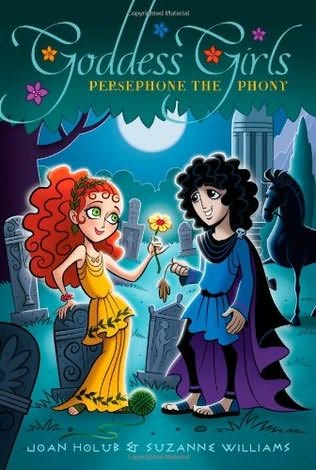
Persephone the Phony (Goddess Girls) by Suzanne Williams and Joan Holub

Goddess Girls is a cute series for young girls about goddesses from Greek mythology, namely Persephone, Athena, Aphrodite and Artemis. This is the first book I've read in the series and I was drawn to it because I've always liked the story of Persephone and Hades, and though the story is called 'The Rape of Persephone' I've always considered it to be more of a forbidden love story than Hades taking her against her will.

The goddesses in this series are 12, the supposed age of the potential reader and all of the gods and goddesses interact mostly at god- school, with Zeus as the principle. Persephone is a shy girl and always goes along with what her friends want to do or are interested in instead of saying what she would like to do, and because she is always going along with her friends and hides her real feelings she starts to think of herself as being phony. Then one day after school, Aphrodite convinces Persephone and Athena to go shopping with her. She is convinced to buy a ball of yarn (among other things) and on her way home she drops the yarn and it unravels and falls down to earth to a cemetery. Persephone goes after it and when she gets to the cemetery she is intrigued by it, as she has never been to one, and she finds that she feels very calm in this place. Then, the ground shakes and opens up and out comes a young Hades on a black stallion. They get to talking and Persephone finds that Hades is quite a nice person and inspires her to say what she's really feeling, but alas the meeting is interrupted by Demeter, Persephone's mother, who gets angry at Persephone for not telling her where she had gone. As the story progresses, Persephone and Hades have a few more chance encounters (almost every time someone warns her away from him) and Persephone starts feeling like she should stand up for herself more. Aphrodite asks her to go shopping again and this time she refuses and goes to see Hades instead, but on the way there she sees a pomegranate orchard and stops in for a bite.  Hades comes up and they have some fun spitting the seeds but as it turns out her friends were spying on her and tell her mother what she's been up to. Persephone is angry at everyone for this invasion of privacy and runs away to the underworld with Hades (instead of being dragged) and tells him that she's tun away and wants to live with him. In contrast to the myth, he actually sends her back however, telling her that the underworld isn't a place for her and that her mother would be worried. Persephone has a talk with her mom and then seeks Hades out at school the next day and he asks her to go to a dance.

It's not exactly the myth, but the main pieces are in the right place. They meet on earth, and Persephone's making a daisy chain at the time, so she's still interacting with nature at some level when he meets her. The pomegranate is still the turning point in their relationship, after that she begins to act more in her own interest instead of going along with what other people say, and after that point they end up getting together. And she did go down into the underworld, she was just sent swiftly back to mount Olympus. Overall it was an enjoyable read and a fun interpretation.. and maybe an introduction for some kids, to some of the more well-known female goddesses in Greek mythology. I haven't read any of the other books, but this one was pretty good so I would think those are ok as well.

Saturday, 19 February 2011

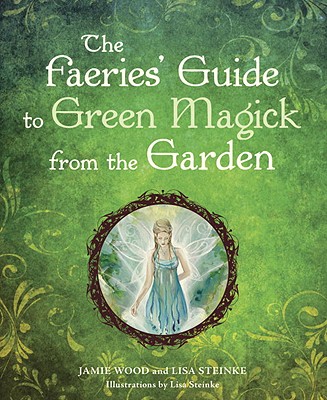
The Faeries' Guide to Green Magick from the Garden by Jamie Wood andLisa Steinke

This is a really interesting book on herbs and other plants. The book is not more than 200 pages so is obviously not as extensive as other herbal guide, but it's still very interesting.

The book states that a faerie is the life force of nature, plant energy if you will. The authors come to this conclusion because they say faeries can be found in nature, like dryads in trees, gnomes in hills, etc. The purpose of this book is essentially to merge meditation or a spiritual mentality with gardening, or what the authors call 'green gardening'.

Each herb's description is approximately 2 pages long and is accompanied with a picture of a faerie. What I really like about this book is that it isn't all spiritual or all medical, but it's a combination of both. The authors provide a short description of the plant and how to use/ store/ gather/ preserve it. Then they provide a short historical or mythological context for the plant and it's healing uses, home remedy like stuff. Then, after that, they give you a little recipe you can use the herb in or a recipe to make a product of some sort. As the book is not very long the author's do not get too deep into every plant and they give different information on different plants, but it's still a very interesting read.

Monday, 17 January 2011

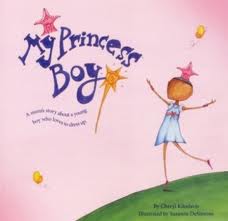
My Princess Boy by Cheryl Kilodavis

This book is  more an awareness book than it is a story. The mother of two boys narrates the book and she says that one of her sons is a princess boy. That means that he likes to dress up in dresses and crowns and other traditionally girly clothing instead of clothes boys usually wear. He also like to play games girls usually play. The book takes the reader through various activities the princess boy likes to do and near the end she says that though some people laugh at princess boy, she never will, and then she asks the audience if they will.

The book is a good example of spreading awareness. Not all boys like to play with trucks and bugs, that whole idea. It's effective in presenting its message and the pictures are bright and colourful and whimsical. A good choice to introduce gender identity or gender construction.

Monday, 10 January 2011

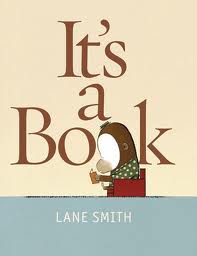
It's a Book by Lane Smith

This is a cute picture book mocking the ultra- techno society we seem to  becoming. The book is about a monkey and a donkey. The donkey is on his computer when he notices that the monkey has a weird rectangular thing made of paper in his hands. He then proceeds to ask him what it is and how to use it, but he keeps asking questions that would only apply to an electronic device. For example the donkey would ask 'how do you scroll down?' or 'does it need a password?' to which the monkey always replies 'it's a book'. It's a funny and playful reflection on the move from physical things to more digital medium.

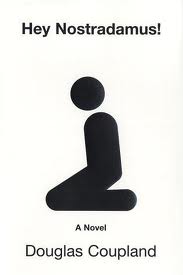
Hey Nostradamus! by Douglas Coupland

This is a story about high school massacre in Vancouver in 1988 and how that massacre affected various characters in the novel, at least on the surface. More than this story being about a cause and effect play by play of an unfortunate event, it is about how people deal with situations with faith and the difference between religion and spirituality. Before I get ahead of myself here I would like to say that this book is not at all preachy, nor is it accusatory or abrasive. It is not so much a book about religion as it is a book about how people act when being 'religious' or not, and what that actually means. Each of the main characters in turn display a fervent belief and then a denial or realization that what they once believed may not be what they supposed it to be. Some people may not want to read this book because it has religion in it, and to those under that category I say that you will not be offended and will enjoy the book. To those who may read the book because it is about religion I want to say that it is more about individual interpretation and potentially exploitation for personal gain than it is a celebration of any faith, and you may be offended at some parts, but not deeply.

The novel is told through the eyes of four people, and each person was strongly impacted by the narrator before him or her. The story begins with two high school sweethearts, Cheryl and Jason, who love each other immensely and get secretly married (both because they love each other and because they want to have sex without committing a sin). Cheryl, the first narrator, became religious because she liked Jason and he was very religious (because of family reasons), but she soon come to strongly associate with the faith personally and throughout her segment of the story she speaks only to god, and we the audience over hear her prayers. Then one day a couple of youths from their high school hijack the school cafeteria with a couple of guns and kill some people, one of those people being Cheryl. Jason comes in to save her at the last minute and kills one of the terrorists, but is too late to save Cheryl.

Jason is the next narrator and we come into his life several years after the tragedy. Though Jason was seemingly religious in high school, he was so because of his father's fervent, almost nervous devotion to religion. His father was a very judgmental man and Jason could never seem to do anything quite good enough to satisfy him. After the massacre it was rumoured that Jason had planned the entire thing, and of course a majority of the town believed it. Even after he was proved innocent by the law and was named a hero by some of the papers his father could only see the fact that he'd killed a boy, no matter how many lives he might have saved in the process. Jason's account is very bitter in some places. The world had not been kind to him and he could not move on. Unlike the other narrators, Jason's account doesn't largely deal with his own personal relationship with religion. He talks more about how others relationships with religion have affected him, and how even though he isn't religious himself, he still falls back on some of the institutional rituals followed by people who believe.

The next narrator is named Heather, a woman who enters a sort of awkward relationship with and eventually marries Jason. Jason disappears shortly after her segment begins, and Heather deals with a psychic named Allison who seems to be in contact with Jason on some sort of spiritual level. This segment was interesting for me because it made me reflect on how people in contemporary, secular society seem to find pathways to express some sort of religious behaviour. Obviously believing in a psychic being able to contact individuals is a reflection of faith on some level. But more than the whole psychic thing, what was interesting to observe was Heather's behaviour and relationship with her desire to contact this person. Her need at these times were, while completely devoid of religion, were still strongly tied to faith. And what's more is I could associate her behaviour to what I've seen people feel while in a romantic relationship, or while at work, or studying, etc. That almost feverish desire is present in many aspects of life, not just religion, and that calls into question where one can draw the line between faith and religion. Or where one can start to separate faith and spirituality. Religion has a very defined identity in pop culture, and if you're not a card carrying member, the idea of it can be very unattractive. But how many of our day to day hopes and dreams and actions could be classified by an outsider as being likened to what we classify religious action? Just something to think about.

The last narrator is Jason's father, Reg. We hear many tales of this man throughout the novel, most of them unflattering. So by the time we get to hear him speak there is already a sort of prejudice against the man. Reg's account is more of a reflection than it is a narration or a tale recounted. He speaks of his faith, but in a refreshing way that I will not go into detail about.

I listened to this book aurally and I really enjoyed the voice actors. I thought the people chosen were well suited to their roles and were a pleasure to listen to. Overall this was a good book and I would recommend it.