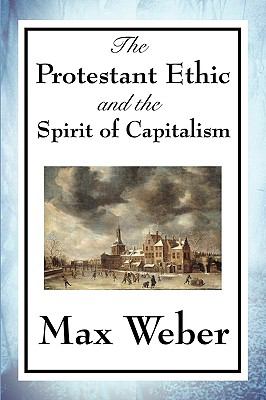
This book was somewhat difficult to get through because of the footnotes (I have trouble with footnotes), once you get over that though, it's a fantastic book. It discusses why the capitalist system we have now, and the morality we have now, is the way it is. We have all heard of the protestant ethic, yes? It is the idea that you must work hard, without receiving too much pleasure, for the sake of pleasing God. Working as hard as you can allows a person to 'most effectively' utilize the gifts God has given them, but they cannot take pleasure in the fruits of this because too much pleasure would result in the breaking of some sin, greed or sloth or what have you. But if you can't have fun with what you're working so hard to create, why work so hard? Because you are pleasing god, setting yourself up for the next life. Well this is wonderful for a historical reference, but we're very much secularized in society today so why does any of this matter? Well, Weber contends that a man named Calvin (yes Calvinism) took the protestant ethic and tied it to capitalism. Calvin took the protestant ethic, which was good because it got things done with little complaint from the workers, and connected it to the economic system by turning the idea of pleasing God into earning money. We can imagine the problems with this. If nothing else, there would be trouble behind the fact that what motivated people before was spiritual, and now we expect the same results because of different motivations. That's like using a car to float down a river instead of a boat. Ya cars go forward wonderfully, on the medium they were designed for.
So now we all ascetically put ourselves into our work towards the end of making more money. I'm not a history buff so I don't know if this is true or was just used as an example of how religion effected capitalism, but I don't really care as I can see the connections between the protestant ethic and our capitalist morality.
Weber calls where we are now the iron cage, kind of pessimistic, but he believes that now that we're in this position, we're stuck here. We can't get out of the mental state we are in now, which I don't necessarily agree with, but can see how someone could. If you leave the economic system today and do not movie to some isolated cabin in the woods, chances are you'll end up on the street. I think this is my favourite quote, it's right at the end of the book and sums up the final point quite well.
"No one knows who will live in this cage in the future, or whether at the end of this tremendous development entirely new prophets will arise, or there will be a great rebirth of old ideas and ideals, or, if neither, mechanized petrification, embellished with a sort of convulsive self- importance. For the last stage of this cultural development, it might well be truly said: Specialists without spirit, sensualists without heart; this nullity imagines that it has attained a level of civilization never achieved before"
An eye opener to say the least, but a really good read.