Showing posts with label fiction. Show all posts

Saturday, 12 March 2011

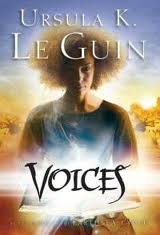
Voices by Ursula le Guin

This is the story about an adolescent girl named Memer. She lives in a city that was conquered by the Alds when she was born and has only known living in an occupied country. Her people were known by other places as a great place for learning and for the world's most comprehensive library, but the Alds feared the written word and believed that it held demons. They also feared the many gods Memer's people worshiped and called them all demons. The Alds had one god they obsessively worshiped, and were fearful of anything else. Ever since she was a girl, Memer often escaped to a secret room in the large house she lived in. Her mother took her there when the city was first being attacked to protect her, as the room was hidden and could only be open by a series of hand movements. The Waylord, the elected leader of their people, found her there and taught her to read. He also shares a house with Memer and becomes a sort of surrogate father for her (Her mother died in the attacks when she was small and she never knew her father as he was an Ald, and though it is very vaguely hinted at, Memer's mother was raped, but chances are most people whom the book is targeted for will miss this fact).

Then one day a storyteller (called a maker in the story) and his companion come to the city. Memer feels an instant draw to these people and, after an incident in the town square, invite them to stay as guests in the Waylords house. The Alds value the spoken word as it turns out and have the maker come to them to tell stories and sing songs. It is with the arrival of these two people that the situation slowly begins to shift. Through Memer, the reader gets to see a little bit more of the Alds, but not too much as Memer's anger toward them is so strong. There are whispers of a revolution, and Memer finds out that there is more to the secret room and the books there than she first thought. Will Memer and her people ever be free of the Alds?

I thought this was a very well written book with an intriguing story line. It is a story about overcoming hatred, fear, and ignorance to find knowledge and truth. I found Memer to be a likeable character, though she was often held back by anger or fear. The role of books and reading was also interesting. They were forbidden and seen as being evil magic by the Alds, and while this seems like make-believe, there are some people who believe books are bad, not because reading is an evil magic ability, but because of the ideas they can give you. I  like Ursula le Guin but it took me a really long time to pick this book up because the cover looks kind of cheesy. However, just another lesson in not judging books by their covers, it was a good parable for finding strength in truth and knowledge.

Thursday, 24 February 2011

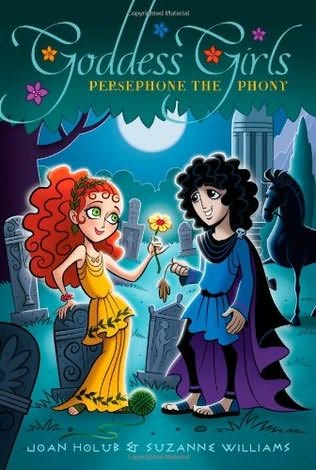
Persephone the Phony (Goddess Girls) by Suzanne Williams and Joan Holub

Goddess Girls is a cute series for young girls about goddesses from Greek mythology, namely Persephone, Athena, Aphrodite and Artemis. This is the first book I've read in the series and I was drawn to it because I've always liked the story of Persephone and Hades, and though the story is called 'The Rape of Persephone' I've always considered it to be more of a forbidden love story than Hades taking her against her will.

The goddesses in this series are 12, the supposed age of the potential reader and all of the gods and goddesses interact mostly at god- school, with Zeus as the principle. Persephone is a shy girl and always goes along with what her friends want to do or are interested in instead of saying what she would like to do, and because she is always going along with her friends and hides her real feelings she starts to think of herself as being phony. Then one day after school, Aphrodite convinces Persephone and Athena to go shopping with her. She is convinced to buy a ball of yarn (among other things) and on her way home she drops the yarn and it unravels and falls down to earth to a cemetery. Persephone goes after it and when she gets to the cemetery she is intrigued by it, as she has never been to one, and she finds that she feels very calm in this place. Then, the ground shakes and opens up and out comes a young Hades on a black stallion. They get to talking and Persephone finds that Hades is quite a nice person and inspires her to say what she's really feeling, but alas the meeting is interrupted by Demeter, Persephone's mother, who gets angry at Persephone for not telling her where she had gone. As the story progresses, Persephone and Hades have a few more chance encounters (almost every time someone warns her away from him) and Persephone starts feeling like she should stand up for herself more. Aphrodite asks her to go shopping again and this time she refuses and goes to see Hades instead, but on the way there she sees a pomegranate orchard and stops in for a bite.  Hades comes up and they have some fun spitting the seeds but as it turns out her friends were spying on her and tell her mother what she's been up to. Persephone is angry at everyone for this invasion of privacy and runs away to the underworld with Hades (instead of being dragged) and tells him that she's tun away and wants to live with him. In contrast to the myth, he actually sends her back however, telling her that the underworld isn't a place for her and that her mother would be worried. Persephone has a talk with her mom and then seeks Hades out at school the next day and he asks her to go to a dance.

It's not exactly the myth, but the main pieces are in the right place. They meet on earth, and Persephone's making a daisy chain at the time, so she's still interacting with nature at some level when he meets her. The pomegranate is still the turning point in their relationship, after that she begins to act more in her own interest instead of going along with what other people say, and after that point they end up getting together. And she did go down into the underworld, she was just sent swiftly back to mount Olympus. Overall it was an enjoyable read and a fun interpretation.. and maybe an introduction for some kids, to some of the more well-known female goddesses in Greek mythology. I haven't read any of the other books, but this one was pretty good so I would think those are ok as well.

Monday, 10 January 2011

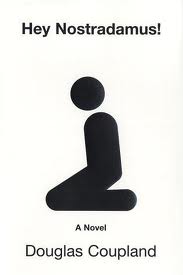
Hey Nostradamus! by Douglas Coupland

This is a story about high school massacre in Vancouver in 1988 and how that massacre affected various characters in the novel, at least on the surface. More than this story being about a cause and effect play by play of an unfortunate event, it is about how people deal with situations with faith and the difference between religion and spirituality. Before I get ahead of myself here I would like to say that this book is not at all preachy, nor is it accusatory or abrasive. It is not so much a book about religion as it is a book about how people act when being 'religious' or not, and what that actually means. Each of the main characters in turn display a fervent belief and then a denial or realization that what they once believed may not be what they supposed it to be. Some people may not want to read this book because it has religion in it, and to those under that category I say that you will not be offended and will enjoy the book. To those who may read the book because it is about religion I want to say that it is more about individual interpretation and potentially exploitation for personal gain than it is a celebration of any faith, and you may be offended at some parts, but not deeply.

The novel is told through the eyes of four people, and each person was strongly impacted by the narrator before him or her. The story begins with two high school sweethearts, Cheryl and Jason, who love each other immensely and get secretly married (both because they love each other and because they want to have sex without committing a sin). Cheryl, the first narrator, became religious because she liked Jason and he was very religious (because of family reasons), but she soon come to strongly associate with the faith personally and throughout her segment of the story she speaks only to god, and we the audience over hear her prayers. Then one day a couple of youths from their high school hijack the school cafeteria with a couple of guns and kill some people, one of those people being Cheryl. Jason comes in to save her at the last minute and kills one of the terrorists, but is too late to save Cheryl.

Jason is the next narrator and we come into his life several years after the tragedy. Though Jason was seemingly religious in high school, he was so because of his father's fervent, almost nervous devotion to religion. His father was a very judgmental man and Jason could never seem to do anything quite good enough to satisfy him. After the massacre it was rumoured that Jason had planned the entire thing, and of course a majority of the town believed it. Even after he was proved innocent by the law and was named a hero by some of the papers his father could only see the fact that he'd killed a boy, no matter how many lives he might have saved in the process. Jason's account is very bitter in some places. The world had not been kind to him and he could not move on. Unlike the other narrators, Jason's account doesn't largely deal with his own personal relationship with religion. He talks more about how others relationships with religion have affected him, and how even though he isn't religious himself, he still falls back on some of the institutional rituals followed by people who believe.

The next narrator is named Heather, a woman who enters a sort of awkward relationship with and eventually marries Jason. Jason disappears shortly after her segment begins, and Heather deals with a psychic named Allison who seems to be in contact with Jason on some sort of spiritual level. This segment was interesting for me because it made me reflect on how people in contemporary, secular society seem to find pathways to express some sort of religious behaviour. Obviously believing in a psychic being able to contact individuals is a reflection of faith on some level. But more than the whole psychic thing, what was interesting to observe was Heather's behaviour and relationship with her desire to contact this person. Her need at these times were, while completely devoid of religion, were still strongly tied to faith. And what's more is I could associate her behaviour to what I've seen people feel while in a romantic relationship, or while at work, or studying, etc. That almost feverish desire is present in many aspects of life, not just religion, and that calls into question where one can draw the line between faith and religion. Or where one can start to separate faith and spirituality. Religion has a very defined identity in pop culture, and if you're not a card carrying member, the idea of it can be very unattractive. But how many of our day to day hopes and dreams and actions could be classified by an outsider as being likened to what we classify religious action? Just something to think about.

The last narrator is Jason's father, Reg. We hear many tales of this man throughout the novel, most of them unflattering. So by the time we get to hear him speak there is already a sort of prejudice against the man. Reg's account is more of a reflection than it is a narration or a tale recounted. He speaks of his faith, but in a refreshing way that I will not go into detail about.

I listened to this book aurally and I really enjoyed the voice actors. I thought the people chosen were well suited to their roles and were a pleasure to listen to. Overall this was a good book and I would recommend it.

Tuesday, 10 August 2010

I Dream Dragon

I have loved dragons all my life. Here are some fictional books that have enhanced my love and have helped to paint the world in which they live.

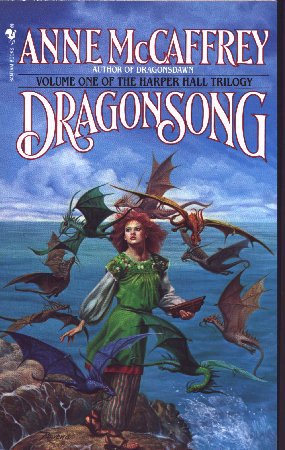
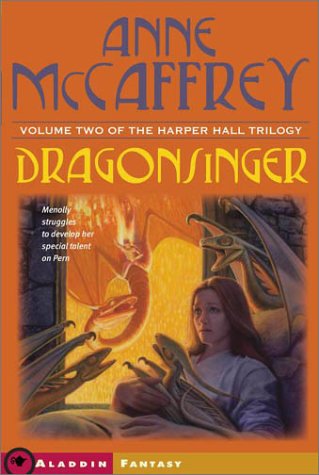
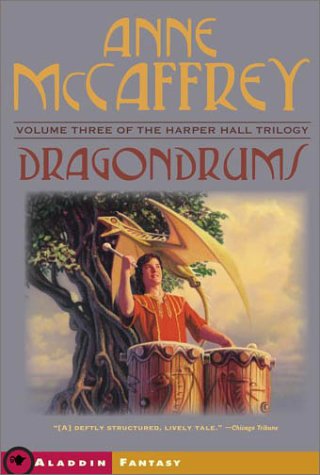
Harper Hall of Pern Trilogy - Dragonsong, Dragonsinger, Dragondrums- great trilogy about a young girl who lives in a place where music is forbidden to girls and dragons are only for dragon riders, until one day she runs away from home and stumbles upon a clutch of small dragons that bond with her.

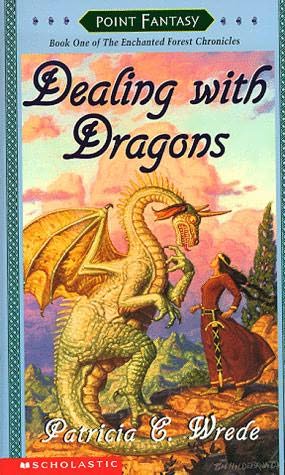
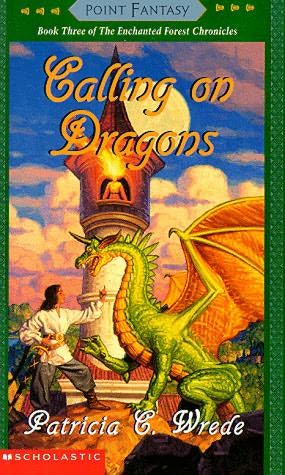
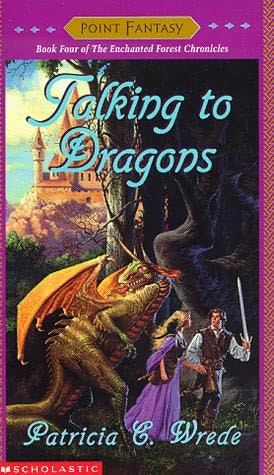
The Enchanted Forest Chronicles- Dealing with Dragons, Seaching for Dragons, Calling on Dragons, Talking to Dragons- amazing series about a princess who was captured by a dragon... and doesn't want to be rescued. Instead she befriends the dragon and they go off on adventures. The old covers look so much better than the new ones.

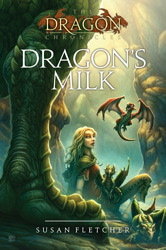
The Dragons Chronicles- Dragon's Milk, Flight of the Dragons Kyn, Sign of the Dove - a collection of books about girls who can speak with dragons in a time when dragons are being hunted down and killed. These girls try to save the dragons.

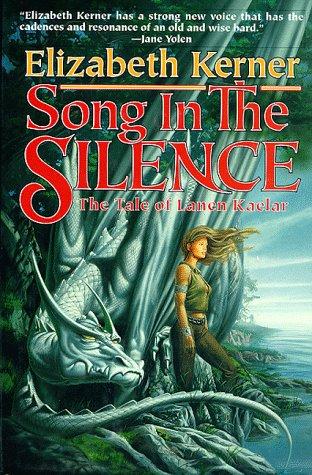
Song in the Silence - story about a young woman who falls in love with a dragon. Not as cheesy as it sounds.

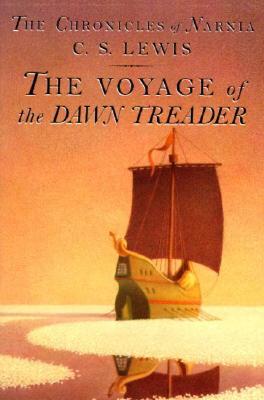
Voyage of the Dawn Treader- chronicles of Narnia. book 5. One of the selfish children gets turned into a dragon.

The Ice Dragon- story about a girl who loves the cold and because of her inhuman tolerance and love of it, creates a bond with the legendary ice dragon.

The Book of Dragons- great collection of short stories by E. Nesbit, a classic children's author.

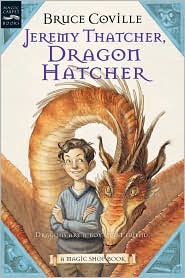
Jeremy Thatcher, Dragon Hatcher- a young boy escapes some bullies by running into a magic shop and comes out with a dragon egg.

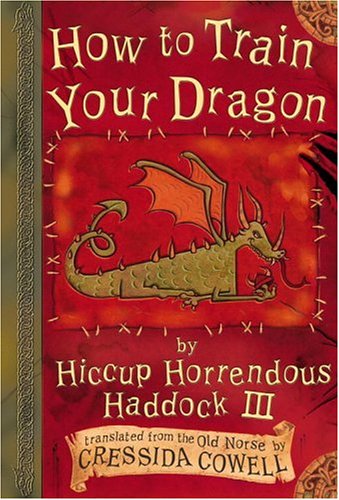
How to Train Your Dragon- story about a viking boy who isn't very good at being a viking, but his strange dragon training techniques may just save his town.

Kira (Shadow of the Dragon)- after the capture of their family, two sisters befriend a dragons and go about fulfilling a prophecy about bring down an unwelcome kingdom.

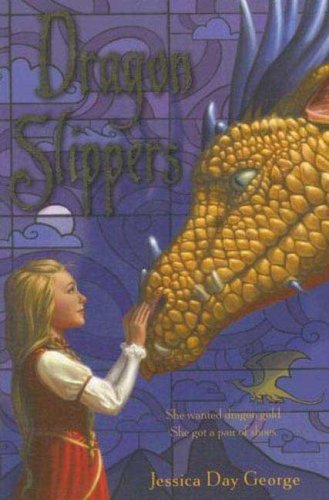
Dragon Slippers- Taking a few notes from Wrede's Enchanted Forest Chronicles, this is a story about a girl whose aunt offers her to the local dragon so that a prince will come to save and marry her. When the prince comes she blows him off and goes her own way, but takes a pair of shoes from the dragon's cave. She meets with another dragon later on and befriends it.

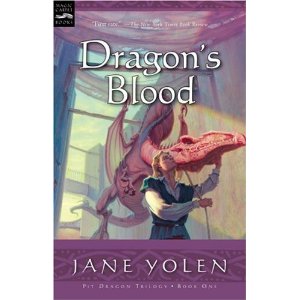
Dragon's Blood- boy tries to train a dragon

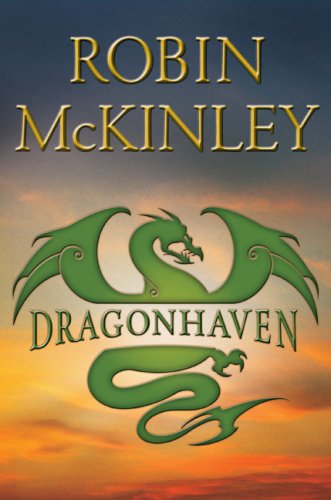
Dragonhaven- boy takes care of a dragon. Not as good as her other books, but not horrible.

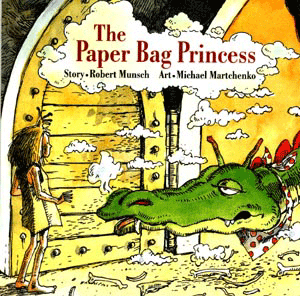
The Paper Bag Princess - classic story book about a princess who goes off to save her prince from a dragon. After she outwits the dragon and saves him however, she realizes that he's not worth the trouble and leaves him in the dust. All of his stories are better when you hear him read them, so look up the audio... it might be on his website.

Tell Me A Dragon- This book doesn't really have a plot, it is more a collection of different people saying what kind of dragon they have, and by dragon I would assume they mean imagination. It goes through many different kinds of dragons, fire breathers, ice dragons, big dragons, etc. and is more a kind of book to inspire you to take pride in your own imagination than it is taking you through someone else's.

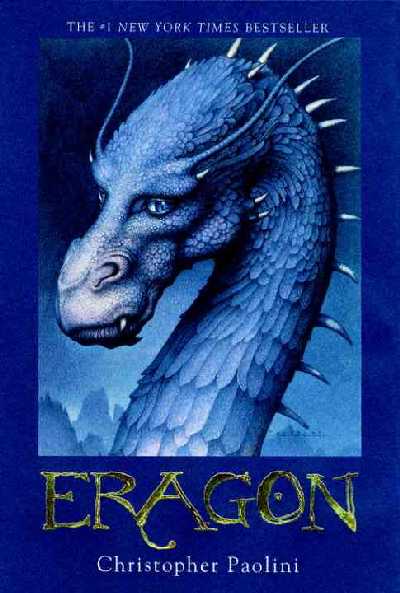
Eragon- farm boy finds a dragon egg and forms a bond with the dragon when it hatches, they go on adventures.

Dragonheart- Great movie about a dragon who gives his heart to save the life of a prince.. and it backfires. Two words. Sean Connery.

Pete's Dragon- An orphan and his dragon friend, who is invisible unless he so chooses, meets a nice lighthouse keeper and his daughter.
Sunday, 10 January 2010

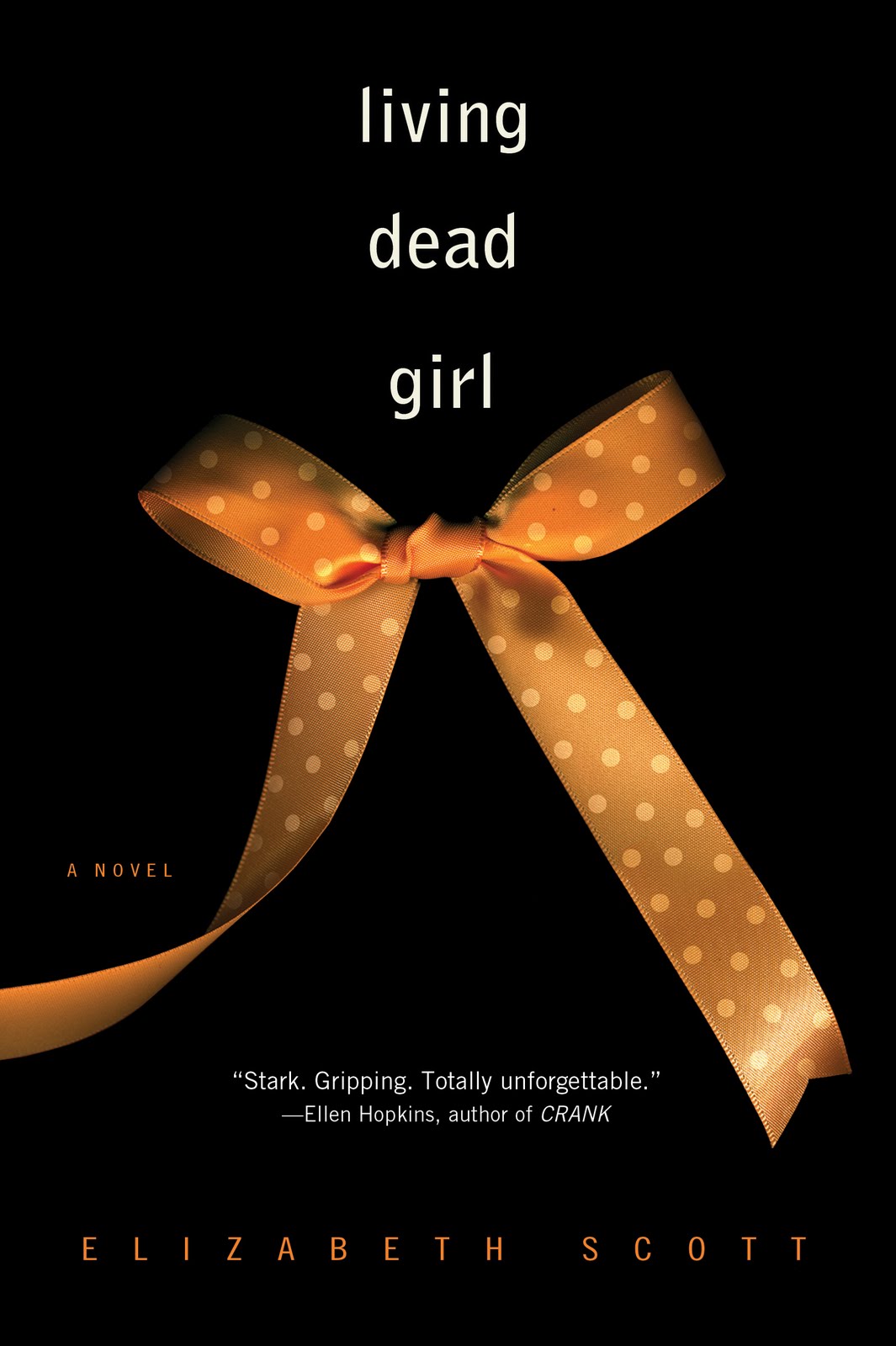
Living Dead Girl by Elizabeth Scott

I was in a minor state of depression after reading this book. It only took me an hour to read, and for about an hour after I was lamenting having read it...but not in a this book was horrible' way, but more in appreciation of the horror.

We have all heard about those sick cases where some pedophile man abducts a young girl and has his way with her, whether it was an adult warning you as a child or a story in the news, we all know it exists, and if you heard about it in the news you know that it's more than a ghost story. This book is told from the perspective of a girl who was taken and who has had to live with her captor for 5 years while he raped, starved and abused her every day for that five years. The book isn't very graphic as to the details of these events, it's a book for teens, but the reader knows what's going on.

The telling of the story is very distant and choppy and the story sporadically alternates between the present, the past, and the girl's thoughts, which effectively allows the reader to loose track of the days as well as to get a sense of the state of mind the girl is in as she tells you her story.

I don't know if this story is based on real life events or if this character was just imagined, but by reading this I could better understand how a person could be convinced to stay in such a circumstance. Typically when confronted with a case like this you ask yourself 'Why didn't she just leave? Why would she stay in that situation and not try to escape?' and more terrifying, you think that in a similar situation you would never act the victim. But the way this story is presented allows the reader to sympathize with the girl's position, and not just take note of the suffering she's undergone. There's one part where the girl is watching a talk show with people who had undergone abuse on it. the host asks the woman why she stayed with whoever was abusing her and the audience all yells that she should have done something about it and the woman nervously concedes the point. At this the girl points out to the readers that the woman is still the broken shell of a person she was when she was being abused because she meekly gives the audience what they want (as she most likely gave in to whoever abused her) and says that yes she probably should have done something. The audience yells out to the girl because they can see that she is weak and that they are in a position of power, and would not want that power taken away so almost blame the woman for what happened to her. That part of the book is where I think the author is speaking directly to the reader, telling you to reassess your initial impressions because these people who have undergone this abuse do not think like you do while you're sitting on your couch casually passing judgements on how these people could have avoided this abuse (as if it was their fault) ... And yet, even though you are not undergoing the severity of abuse that this person has suffered, you too play with whatever power you have at the expense of others in order to ensure your own comfort. This sentiment is found throughout story.

As for the plot itself, I won't go into too much detail as you probably can guess they story before you read it.. it's a living nightmare we can only imagine. The story begins after approximately five years of this girl's captivity, though she reminisces for you every now and again so that you know how she got to be where she is. Her captor's name is Ray and he named her Alice. He had an abusive childhood himself so is sort of messed up and wants Alice to be an eternal child, therefore he starves her to keep her thin. He also sleeps with her almost every night. When this first happened in the book, I was sort of taken aback because I didn't think the story would go that way.. or at least not so suddenly, but Alice was very calm. Her recounting of the events in the story always sound sort of calm, detached almost,  because she's grown accustomed to her situation. That is not to say that she likes her situation, many times she tells us how she's tried to suffocate or drown herself or how she wishes for death. She hates where she is, but has come to know it as her reality. An odd testament to the resilience of human beings.

I've always been somewhat critical of girls who pay too much attention to their looks and to boys and such, but after reading this, that's exactly what I wanted this girl to become, or had the chance to become. A girl just like every other girl who has nothing more important to worry about than her hair or her nail polish. What she might have become if she hadn't been abducted.

This book hooked me from the first page, and thank goodness it was only 100 something pages because once you start reading it, you have to get to the ending. Overall this was a thought provoking book about the power relations you have with others. What 'power' actually is and the potential effect exerting that power over others might have. This story was like an emotional bludgeon. It will leave you wanting more while making you wish you knew less. A horrifying journey through the life and thoughts of a girl who was in the wrong place at the wrong time.


Friday, 17 July 2009

All My Friends Are Superheroes by Andrew Kaufman

This was a good story. The protagonist, who is just a normal guy, know all of these people with 'super powers', but they're odd super powers, like he's dating The Perfectionist, who makes everything perfect. There was a guy who's super power was to take tension away from people, so he was always invited to parties, and my personal favourite, The Spooner, who would sneak into the houses of lonely women to spoon with them. These kinds of things. So it was more of an an everyday interpretation of a super hero, making specific human characteristics super. Because the super powers were so 'common' each interaction the protagonist had with a super hero seemed like a journey within the self because we, of course, all have at least a little of every 'power' within ourselves. So in that respect its an interesting read. But the ending is cute, even if you don't get over analytical like some (>.>).

Peasants’ Bible and the Story Of the Tiger, The by Dario Fo

This was an entertaining read. The book is essentially a collection of short stories, parodies of bible stories. The first story I enjoyed the most. It was a retelling of adam and eve, told from eve's perspective. The tone she sets is comical in a common sense kind of way. 

There is a part, when she has her period, when she turns to a goddess and she says that the goddess has to hide in a cave so that god doesn't see her and other deities like her. I found this to very symbolic of how though Christianity become the dominant religion, other, older forms of worship didn't completely disappear, they just went underground, so to speak, but still had an effect on the people. 

One of my many impulse purchases, but it was a great read.

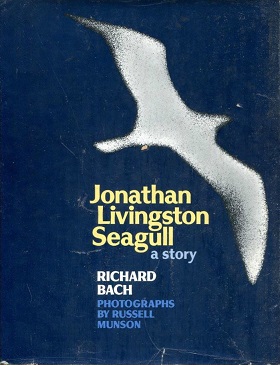
Jonathan Livingston Seagull by Richard Bach

This was a pretty good book. It's about a seagull with a passion, or a vision of something beyond his current reality. He strives for this vision, much to the dismay of the other seagulls and in the end he achieves what he's looking for, which I guess would be enlightenment. This is a quote that pretty much sums up the book for me

"iInstead of our drab slogging forth and back to the fishing boats, there's reason to live! We can lift ourselves out of ignorance, we can find ourselves as creatures of excellence and intelligence and skill. We can learn to be free! We can learn to fly!"
 

The moral is about having a dream and making that dream happen. The process is not without its difficulties but essentially the end goal makes the whole process worth it. ... In a nutshell. Not the most groundbreaking read, but worth the trek if you're in the mood.

A Clockwork Orange by Anthony Burgess

This was an interesting read. Thankfully I read the book before I watched the movie, because although the movie was semi awesome, the ending killed the final point the author made, which was that all of the stuff Alex did, the crimes n such, were a product of his youth. He did it because 'kids are crazy like that' but eventually they grow out of it. Now of course whether this statement was intended to be read literally or symbolically is debatable and I'm sure a couple of hours could be devoted to taking that apart, but as it stands, that point, which I would say is quite significant, was left out of the movie, which I found disappointing. 

The book was great though. The concept it explores is in the title itself -a clockwork orange. an orange that is not allowed to be as nature intended but is being forced to transform itself and act according to the dictates of others. It is being forced to act this way through a technological means, rather than societal influences, though I'm sure one could link social pressures to the situation. The orange of course would be Alex and the clockwork bit would be the treatment he was given to make violence repulsive to him. This treatment doesn't change the fact that he is inclined to commit violent acts, it just prevents him from doing so, taking away his free will. Great imagery, I enjoyed reading it.

It's also cool how the author creates his own language. This effectively encapsulates the terms created by youth and only understood by youth, without putting a time frame on the story by using actual slang from a certain time period.

Great story, definitely check it out.

Thursday, 16 July 2009

Kushiel’s Dart by Jacqueline Carey

This book about about a girl who was born with the mark of a god on her and the story basically follows her life and the trouble she faces because of this mark.
 

The girl is intelligent and she uses her intellect as her weapon. I'd classify this series as an adventure, but Phedre doesn't 'fight'. In fact when she's in physical trouble someone has to go save her and she can't really help herself, but that's not to say that she's a wilting heroine. She earns her own respect by acting on her own and overcomes situations by using her brain. quite the odd heroine by the norm's standards.
 

The author's pretty good with words and has done a bit of research (winning combination). Many things in the novel have a real world reference.
 

It's adventurous, erotic and suspenseful, and I'd say one of those stories you'd call epic. It's around 900 pages, but you'll get through it and be grateful you went through the trek.

Thursday, 9 July 2009

Unbearable Lightness Of Being by Milan Kundera

I really enjoyed this book, it's one of those ones you have to think about. The story follows two couples, Tomas and Tereza and Sabina and Franz. These people are used to embody certain ideals and characteristics, and I interpreted their actions more as metaphor rather than just an act in itself.
 

 I suppose one of the major themes in the book is expressed in the title, this idea of weight in association with how we interact with the world, and whether or not it is a good or bad thing to have. I understood the weight to be our ties to the world, our responsibilities. Like a sac we carry. The question is -is it better to have the sac full of stuff you may need or want with you or is it better to be unburdened? What I found helpful was that for the perspectives presented, the opposite perspective is presented to contrast, neither one being more right than the other.
 

Each of the four main characters had some sort of struggle they were attempting to overcome (which I loved reading about. There is nothing more enlightening and empowering than to watch someone overcome what discontents them). All of the struggles have to do with how the characters interact with those they know, which I saw to be a preference for either weight or lightness.
 

This is one of those books you could (and should) spend hours thinking about.
 

Wednesday, 8 July 2009

Rose And The Beast: fairy tales retold by francesca lia Block

This book was really great. Often with the retelling of a popular story there is the potential to fail miserably, as so many people know and love the original. Even taking the bare bones of a story and (like Cinderella for example) and using it as a plot line for other stories wherein you can clearly see the reference can go horribly wrong because there are so many examples of this story being told correctly and well... that is is somewhat admirable for an author to take on these stories and succeed as did this author.

The book is a collection of short stories, the retold fairy tales being snow white, Thumbelina, Cinderella, Sleeping Beauty, Little Red Riding Hood, Rose Red and Rose White, Blue Beard, Beauty and the Beast, and the Snow Queen.

The author has a very lyrical style of writing that leaves you with an almost evanescent interaction with the emotions she's throwing at you... kind of reminiscent of Patricia Mckillip, but not that intense. Some of the fairy tales are modernized and some aren't, but all of them take a different look the fairy tale in question, staying close enough to the original that you can clearly relate it, but looking at it from different angles, making it almost a different story. The plot doesn't change, the perspectives do.

Definitely a successful attempt.